Fabrication

imagesThere was considerable confusion over Louise Villandré’s long shadow, last week’s post. It arose from conflicting statements at last week’s council meeting from mayor Ed Prévost and councillor Ron Goldenberg concerning the Town of Hudson’s 2017 valuation roll.

The mayor told us the global valuation roll had increased. This would have the knock-on effect of automatically raising the cost of everything based on the town’s global evaluation – policing, public transit, recycling, two levels of municipal government.

Goldenberg, council’s mouthpiece on taxation and budget issues, contradicted the mayor. The roll had decreased, Goldenberg told us. The result, he explained in an email to selected recipients, was lower tax revenues for the town’s own budget items even though the town’s per capita assessment would drop.

This morning I paid a visit to town hall to see for myself the figures contained in the 2016 and 2017 assessments. I take the liberty of rounding off to the nearest $100,000.

Mayor Ed was correct. The global 2017 assessment, effective Jan. 1, is $1.184 billion. Hudson’s 2016 global assessment was $1.178 billion, $6 million less. This represents the total assessed value of every single lot and structure in the municipality.

In fiscal terms, the change in the overall value of the municipality is negligible. Ergo, the tax burden for policing, public transit, recycling and regional government should remain roughly the same.

Goldenberg’s explanation seems to be based on the value of taxable properties. This smaller number excludes churches, schools and federal and provincial installations for which the town receives a payment in lieu of taxes.

Again, comparing apples with apples, the total value of taxable properties in the 2017 valuation roll will increase to $1.114 billion from last year’s $1.107 billion.

That’s a $7 million increase in taxable evaluation, negligible in fiscal terms.

If the valuation roll remains substantially unchanged, what pretext will this administration use to justify what I’m told will be a tax hike in excess of five per cent?

I think I have an answer.

We know some sectors of town have seen big valuation increases in the 2017-2019 roll – 10, 20, even 30 per cent. Others, such as the downtown core, have seen no increase in value. In fact, evaluations on some commercial properties have dropped.

By law, the town must impose a single residential and single commercial property tax rate.

Likewise, it can’t use water and sewer taxes to correct those imbalances (although the town has tried that in the past.)

I suspect last week’s confusion was deliberate. How better to pull the wool over the eyes of a thoroughly demoralized citizenry?

Fiscal policy is simple when it’s transparent. A town needs enough to pay its bills and cover the cost of borrowing money with a few million set aside for the proverbial rainy day. When you’re a town like Hudson, without a commercial or industrial tax base, residential property taxes are your only revenue source. You don’t risk killing the golden goose by overtaxing – the definition of a budget surplus.

So you impose a hiring freeze and cut costs every way you can. You don’t ask taxpayers to fund a lavish spread before every caucus meeting. You don’t squander money hiring lawyers and consultants. Everything you do should be governed by a simple rule: elected and appointed officials must treat the public purse as a trust, not an entitlement.

If you’re looking for a simple bottom line, it’s this:

Whatever Hudson’s administration may tell us at the Dec. 21 budget meeting, there is no fiscal justification for a tax hike in the valuation roll. It’s a fabrication.

Sure as shit it wasn’t the cost of better snow removal.

Louise Villandré’s long shadow

screen-shot-2016-12-06-at-3-34-58-pmFormer town manager Louise Villandré’s shadow hung heavy over Monday’s council meeting as mayor Ed Prévost drew a gloomy picture of next year’s budget and told residents development is the town’s only road to salvation.



The 2017 budget and tax rates will be presented at a special meeting Dec. 21. It begins at 7 p.m.

Hudson, carrying $28M in long-term debt, will see its valuation roll increase by $30 million on a total municipal evaluation of $1.3B. The jump means automatic cost increases for policing, public transit and regional government.

“We thought we could make up the difference by cutting,” Prévost told residents. “That will be impossible — or close to it […] Development is the only option.”

Council proceeded to approve a rezoning request that would permit construction of row housing on Mayfair near the Hwy. 342 entrance to the Hudson Valleys and Alstonvale developments. It is subject to approval by the residents of adjacent sectors.

Also adopted was a resolution approving a public information session sometime next spring for a revised Sandy Beach development project. A 2001 rezoning bylaw approved a mix of townhouses, semi-detached and single-family dwellings but the project was blocked by subsequent administrations on a variety of pretexts.

The latest effort to head off development is being led by Wharf Road resident Richard Grinnell. During the first question period he told the meeting he and others have gathered in excess of 500 signatures in hopes of convincing council to explore the possibility of buying more of the beachfront and adjacent forest.

Following the meeting, director-general Jean-Pierre Roy said the 2001 development plan can’t be applied because of changes to the provincial laws that apply to wetland and waterfront development. Some no longer exist, while others have been updated.

Sandy Beach owner/developer Hans Muhlegg was visibly moved when Louise Craig publicly thanked him for permitting public access, bringing applause from residents. Muhlegg, now 75, never sought public recognition for having contributed more than $100,000 toward the cost of bridges and boardwalks that make the beachfront and adjoining Jack Layton Park a regional destination of choice.

Council approved disbursements that included $86,500 to the town’s lawyers Dunton Rainville. Ron Goldenberg brought gasps from the crowd when he revealed the town’s legal bill reached $395,000 as of Sept. 30. The town has yet to release a file-by file breakdown of the bill.

One was the town’s failure (on Villandré’s watch) to withhold federal and provincial income tax for an unspecified number of municipal employees. As Goldenberg explained, the town is hoping voluntary declarations on behalf of the employees and issuance of revised T-4s will be sufficient to prevent fines and penalties. Questioned as to the number of employees affected and whether the town was “on the hook” for fines and penalties, DG Roy refused to get specific.

Villandré’s name was also invoked in connection with the retroactive abolition of the town’s 2014-15 environmental tax on privately owned sections of 99 public streets. Total cost of the reimbursements: $5,155.50. Cost of legal advice: Unknown.

The mayor invoked the failure of previous administrations to repair the Pine Lake dam as the reason why the structure failed two winters ago. He hinted at the existence of a report urging immediate repairs which had been ignored. Questioned about why the current administration hasn’t moved to replace the dam, Prévost told residents it’s a matter of priorities — and there are plenty more important.

Villandré served as both DG and treasurer for most of her 34-year career under mayors Bradbury, Elliott (twice), Shaar and Corker. She was released from prison in October after having served six months of a 30-month prison term for defrauding the town of in excess of $1M over a seven-year period. The Crown didn’t seek restitution due to Villandré’s bankruptcy and age, although some on council think the town should try to seize her pension. Villandré, now on parole, is living in the region.

The municipal payroll has expanded to include 128 full and part-time employees. Newest hires to be approved:
– a full-time temporary employee to prepare grant applications;
– a permanent Culture, Tourism and Communications resource;
– a Youth Centre co-ordinator to replace the retiring Donna Brazeau.

Monday’s meeting was the first for Hudson’s new town clerk, lawyer Cassandra Comin Bergonzi. She replaces Vincent Maranda, who left earlier this fall to resume private practise. Meanwhile, the search is on for a treasurer following last month’s abrupt departure of Serge Raymond, Hudson’s fourth treasurer in three years.


The Trudeux

What a coincidence. Within the space of 24 hours, the Trudeau Liberals and the Trump Republicans moved to quash the electoral reforms they vowed to enact once elected.

Yesterday was Canada’s turn, with Parliamentary Reform Minister Maryam Moncef crapping on a Commons committee for doing what it was mandated to do. That was to come up with alternatives to the winner-takes-all electoral system that won the Libs the last election.

Today, it was President-elect Donald J. Trump’s turn. His supporters filed legal challenges to stop presidential election recounts in Pennsylvania, Wisconsin and Michigan.

Lawyers for Green Party leader Jill Stein admit there’s no chance the recounts will change the election outcome, which saw Trump take the Electoral College vote even though Democratic candidate Hillary Clinton won the popular vote by a significant and growing margin.

“In an election already tainted by suspicion, previously expressed by Donald Trump himself,” Stein said, “verifying the vote is a common-sense procedure that would put all concerns around voter disenfranchisement to rest. Trump’s desperate attempts to silence voter demands for recounts raise a simple question: why is Donald Trump afraid of these recounts?”

The Michigan board split, 2-2, along party lines, meaning the Trump objection failed and the recount will continue. Wisconsin and Pennsylvania have yet to decide.

North of the border, Moncef spent today apologizing to her Commons colleagues. Moncef, on probation for falsifying her right to refugee status,  will pay dearly in the first cabinet shuffle. The Trudeau brand took its second hit in as many days (Kinder Morgan Wednesday, electoral reform Thursday).

Worse, there’s the growing perception that Trudeau is just another opportunistic politician and his vow of electoral reform was electoral bullshit. The same fickle media which was fawning over Canada’s lordling short months ago is listing his broken promises and comparing him with his predecessor.

That’s not the worst of it. Canadians used to nod off when the topic of proportional representation came up. Now they’re wondering why the same people who were howling for electoral reform in Opposition are now trying to tell us it’s a bad idea.

Until this week, I dismissed the R word. Now I’m thinking a referendum on electoral reform is the only way forward.

We thought they were polar opposites, but Trudeau and Trump share certain basic concerns, such as retaining power. My pal Peter nicknames them the Trudeux.


On borrowed time

Would Quebec’s Ministère des transports allow motorists to use a bridge they knew was unsafe?

Someone asked me that this week, along with when the eastbound slow lane on the Ile aux Tourtes bridge would reopen to traffic.

I wish I had answers.

This week marks the first anniversary of the lane shutdown. It’s still closed to traffic. The Ministére des transports (MTQ) is uncharacteristically mute on the closure and expected duration of repairs.

I can tell you the state of the Île-aux-Tourtes span concerns the Treasury Board, which includes the bridge in this year’s list of major projects. Prior to this year’s budget, taxpayers paid $47.8M to keep the bridge open. This year’s emergency repairs are budgeted at $7.3M with another $5.5M already earmarked for next year.

The Treasury Board must decide whether it’s cheaper to repair or replace the thing.
Opened in 1966, the 1.9 km span was built of eight prestressed concrete box beams. It was originally designed with a 50-year life cycle based on 25,000 vehicles a day. Now at the end of its 50-year life expectancy, the span carries 83,000 plus vehicles a day. Twelve (12) % of that are trucks, which set the entire bridge to shaking when several are crossing at the same time.

Successive inspection reports have detailed advanced and accelerating deterioration. The major concern is the southernmost box beam. The added weight of breakdown lanes cantilevered onto the original structure 20 years ago is prying the beam apart. From underneath the bridge one can see massive cracks in the box beam and several of the piers holding the bridge up. Salt-laden runoff is speeding its destruction.

The MTQ has never been honest on the span’s condition or plans for its replacement. Off the record, we’re told the Ile aux Tourtes would be replaced in 2020. Estimated cost: $500 million plus.

In the meantime  I drive in the fast lane and try to avoid peak trucking hours as I ask myself whether the authorities would allow us to continue using a bridge they knew to be unsafe.

Countdown

With less than a year before the next municipal election, Hudson’s Prévost administration is proceeding with its densification agenda. Good, I say. More residents in the urban core would be welcome news for overburdened taxpayers and local businesses.

But what, if any, of that agenda will be shared with Hudson residents?

Lack of transparency is a chronic disease with the current administration. This council tries to put a positive spin on everything, including spiralling administrative costs and debt of close to $30 million. Everything at town hall is on a need-to-know basis – and it seems to be the unwritten rule that taxpayers have no need to know.

Urban planning director Natalie Lavoie, back from a 10-day suspension for unspecified reasons, told me last week the welcome mat is out for any downtown redevelopment plan. Lavoie’s new-found zeal for moving the development dial suggests she’s ready to get behind anything this council decides. If past victims of town hall’s deadly revolving door are indicative, Lavoie is a marked woman.

Whatever, council will need a compliant urban planning director. I hear Hudson’s downtown core is on the brink of radical change, with two or more multi-unit residential developments rumoured.

One, at the corner of Cameron and Lakeview, looks to be Hudson’s long-promised continuing care seniors’ residence. The town allowed demolition of the former Medi-Centre (98 Cameron) and adjacent cottage at 100 (corner Lakeview) even though no redevelopment proposal for the site has been filed.

Sources tell me the owner of both lots, 971-2577 Canada Inc., intends to submit plans for a three-storey residential project by the spring. At least two of the directors were involved in the new medical complex as well as in the R-55 seniors’ campus disaster.

Technically, the municipality has already lost money on the deal. It bought the former medical centre in 2012 for $450,000 ($200,000 plus a $250,000 tax receipt) and sold it earlier this year for $422,000.

Hudson desperately needs an assisted-care facility so that failing seniors can continue to live here. But this close to the centre of town, next to Cunningham’s? What about parking? Privacy? Greenspace? These were big issues when the Corker administration created R-55 on a dozen hectares at the corner of Côte St. Charles and Hillside.

Rumours persist that Hudson’s only grocery store will shut and move to the northwest corner of Côte Road and the 40. Once that happens, the town will be asked to approve construction of a multi-unit commercial/residential complex.

In the west end, the town has reversed its earlier rejection of Hudson Valleys developer Daniel Rodrigue’s request for a zoning change at the south end of Mayfair permitting him to convert 12 single family dwelling lots into a maximum of 24 semi-detached dwelling lots. The zoning change is subject to a referendum. I hope sector residents will grasp the obvious benefits of entry-level housing at the entrance to some of the town’s most valuable real estate.

In the east end, Auberge Willow Place and five adjacent cadastral units are for sale as a block. Asking price: $3.3M. This includes the Willow, The Anchorage and a residence to the west, plus three parking lots. (The Willow itself is in a residential zone and retains the acquired right to operate for nine months before reverting to residential. The Anchorage is in a commercial zone.) Rezoning to multi-family residential is ruled out.

The best proposal I’ve heard to date comes from Peter Ratcliffe:

“Willow Place should be, in my humble opinion the new Hudson Town Hall. Much cheaper to buy it as a package, sell the lots and buildings we don’t need, use the upstairs rooms for private offices, dining room for common offices, add some water access for a public park, and adapt this relatively new but historic building to municipal offices with lots of parking. Find someone to rent and run the pub and it would make Town council nights more sociable after the meetings. $3.3 mil for a developer won’t fly with any competent developer who can find better profit potential in vacant land without zoning challenges for less money.”

Smart, I say. That’s the kind of thinking this administration needs to entertain as it embarks on the last year of its mandate.

Pay to puff

_dsc0031
Pay to play: Why is the federal government allowing the proliferation of ‘experimental’ marijuana grow ops as it weighs the pros and cons of legalized weed? 

Trump Inc. and the Clinton Foundation are flip sides of the same old pay-to-play tune Canadians know all too well.

In Canada, bribes buy access to power, whether you’re Karl-Hans Schreiber handing fat envelopes of cash to a Conservative prime minister or the head of an advertising agency handing fat envelopes of Adscam cash to Liberal candidates. When it comes to conflicted politicians, Canada has no moral ground to stand on.

The latest example: Bill Blair, the Parliamentary Secretary to the Justice Minister and a member of the task force studying the implications of legalizing recreational weed, was the keynote speaker at a Liberal Party fundraiser attended by a marijuana lobbying group at a Toronto law office that advises clients in the cannabis business.

This morning’s Globe and Mail story notes the $150-a-head event this past spring “appears to violate Liberal Party rules on political fundraisers and Justin Trudeau’s ethics guidelines that direct cabinet ministers and parliamentary secretaries to avoid an “appearance of preferential access.”

In the wake of the Globe’s story the Liberal Party of Canada said it will refund donations from representatives of the Cannabis Friendly Business Association (CFBA), although it denied any ethical breaches. The party’s excuse: it didn’t know the weed reps were lobbyists because they hadn’t registered yet.

The Globe says one of the law partners hosting the event is a corporate secretary in a cannabis business, and another assisted a client doing a medical marijuana startup.

The Cannabis Friendly Business Association represents dope-dispensary owners and cannabis farmers who want the federal government to allow storefront pot shops. The fundraiser was for Toronto Liberal MP Nathaniel Erskine-Smith, who favours decriminalization of marijuana and the idea of pardons for people convicted of pot offences.

Regardless of how I may feel about Canada’s current marijuana double standard, I find the government’s actions reprehensible.

Let’s begin with the proliferation of grow ops. Officially, there are 36 licenced medical pot producers in Canada. Only one of these is in Quebec.

Anybody else growing more than a minimal quantity of marijuana for themselves or others risks a criminal conviction.

And yet anyone can freely buy pot from walk-in dispensaries in Toronto, Vancouver and other Canadian cities and towns.

These still-illegal outlets obtain their product from an undisclosed number of ‘experimental’ grow ops throughout Canada. As I disclose in previous thousandlashes.ca blogs, these grey-market producers are known to police but not to the public – in clear violation of Ottawa’s vow to make the licensing procedure transparent.

Until there’s transparency, what’s to prevent this or any provincial or regional government from selling licences to willing pay-to-play partners?

Because whether it’s weed, fossil fuels or weapons you’re moving, influence peddling is a crime and society is the collective victim.

Prescience

I posted this on Feb. 11/16. I re-post it to claim prescience.

After journalism

Posted on February 11, 2016 by jimduff
The latest issue of Concordia’s alumni magazine carries a hand-wringing piece about the future of journalism as the university’s J school prepares to celebrate its 40th anniversary. Department chair Brian Gabrial gives us the usual hand jive about the loss of jobs (90 at PostMedia and as the CRTC warned last week, potentially hundreds more in TV newsrooms across the country) and the subsequent “damage to what a democratic society is supposed to be in terms of keeping the public informed.”

Nah. I don’t see a connection between layoffs in mainstream media and “damage to what a democratic society is supposed to be.” The thread of the piece — that there will always be a need for university-trained journalists in the newsrooms of the nation — strikes me as less than honest, albeit understandable in an upbeat vehicle designed to elicit donations.

PostMedia is going down because their apps and websites are obsolete, their content is generic and their weeklies can’t compete. The mountain of debt incurred during the Black, Asper and Godfrey iterations have have stripped value from local franchises; time will tell us whether the shotgun marriage of PostMedia’s broadsheets with the Sun’s lowbrow tabs is the kiss of death. Whether it’s 10 words or three, a boring headline is a boring headline.

What killed Canadian journalism?

– the CRTC, Canadian Association of Broadcasters and the Canadian Broadcast Standards Council. This cozy conclave of colluders has silenced Canada’s talk radio community and turned electronic journalists into whipped curs who dare not leave the pack for fear of breaking a story that might piss someone off. So we get news conferences, talking heads and millisecond bites.

– Industry Canada and the federal Competition Bureau. It began in the late ‘70s with the approval of a Southam/Thomson deal giving each a monopoly in Ottawa and Winnipeg. Ownership concentration and the convergence myth fell prey to waves of disruptive technologies — internet, cable, live streaming, tablets smartphones. Every daily in the country suffered the same agonies at approximately the same time — circulation churn, skyrocketing production and distribution costs and a shrinking wedge of the advertising budget. Newsroom cuts meant the end of zoned editions and hungry young reporters eager to accept the drudgery of municipal council meetings. Less local coverage meant fewer readers.

– Incompetent management. Franchises like La Presse and the Toronto Star will survive on their app platforms because they saw the writing on the wall before everyone else. Others are adjusting.The Globe and Mail has dropped its paywall on access to all but a restricted core of business stories and the New York Times (10 free stories/month) now appears to be offering its twice-daily digests free. Meanwhile, PostMedia squandered millions on apps that don’t offer substantially more than CBC, TVA, CTV and Global. Who failed to understand free access pays in eyeballs? Or have PostMedia web hits/visits dropped that far that nobody dares access the analytics?

We thought the weeklies were immune. That changed in November 2014, when Transcontinental and Quebecor reached agreement on a deal transferring 74 Quebecor weeklies to TC for $75 million. The Competition Bureau approved the deal on the condition that TC put roughly half those papers on the market before closing them and laying off their staff. By my own estimate, maybe a dozen survive, leaving communities throughout Quebec with a single weekly newspaper or none at all.

We were an independent, independently printed but distributed by Quebecor. TC refused to distribute us unless they printed us, something that would be prosecuted in the U.S. under federal racketeering laws. The Competition Bureau didn’t see it that way.

The consequences of Quebec’s weekly implosion? Municipal councils, never known for their democratic ideals, have become emboldened. Transparency, what there was of it, is a thing of the past. Weekly journalists know better than to report on anything that might anger the local power structure and cost their papers advertising or the threat of a boycott. Quebec’s freedom of information laws, the Fédération professionelle des journalistes du Québec and the Quebec Press Council are the only weapons we have. They have no teeth but censure and those they censure usually have no shame.

– Lazy, derivative, unproductive newsrooms. How many times when I was Montreal assignment editor did I hear a CBC reporter tell me ‘there’s no story there’ because it wasn’t a news conference? How many times did I see a reporter checking out a file from the Radio-Canada library and putting together the context for a story before heading out? How many radio/TV/online outlets credited the Globe and Mail’s Cathy Tomlinson for the B.C. shadow-flipping investigation? How many times did I read our stuff in other newspapers and see it on television and be told ‘Jim, it’s diffuse provenance’”?

I’ve worked in daily print as a reporter, editor and manager (Gazette, Star, Montreal Daily News), in television (CBC) and as a talk show barker (CBC, CFCF, Corus) before returning to weekly journalism from whence I sprang. To be be honest, I hired people even if they were J-school grads. As the editor of a small-town weekly, I was looking for the same qualities in my editorial staff that one finds in advertising salespeople — curiosity, inventiveness, perseverance and a refusal to take no for an answer.

Concordia’s journalism school vaunts a handful of successful grads. Here’s a better test of its relevance: how has Concordia’s journalism school evolved in its 40 years? Is it struggling to remain relevant surrounded by dying dinosaurs? Where it should be going from here? How can it redefine itself in terms that don’t include fat jobs in mainstream newsrooms?

Ethnic and cultural community newspapers, radio and television outlets are thriving. Online media — websites, online streaming and social media pages — are evolving as quickly as a Twitter feed. How are they dealing with AI-vs privacy issues? Libel and defamation? Balance and fairness? Sourcing? Political and societal pressure to remain silent or to spin a story? Are we courageous and dispassionate in our exploration of journalistic integrity, bearing witness, point of view, context?
This is how Concordia’s journalism program should be reinventing itself. Either that or accept a slow death by irrelevance.


The Commute from Hell

screen-shot-2016-11-21-at-9-37-15-am
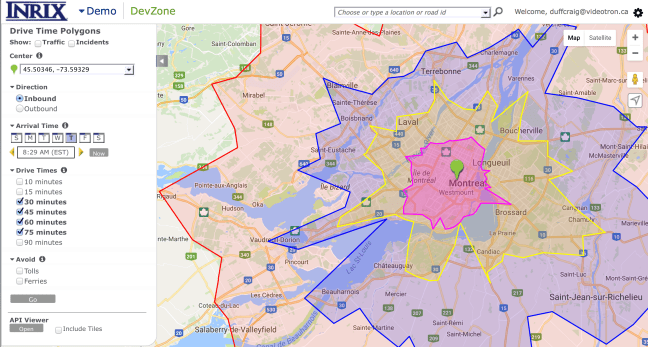
INRIX’s traffic polygon tells off-island commuters they’ll lose 70 hours a year to accidents, construction and weather. That doesn’t include the 130-165 minutes a day we can expect.

If you commute downtown, you won’t soon forget Monday Nov. 21 – the day the season’s first snowfall coincided with the largest lane closure in the Turcot Interchange rebuild.

– The eastbound 720, the main artery for traffic from the inbound 20 and Decarie, is now closed pending its demolition and reconstruction. Transport Quebec hopes for a spring 2018 reopening.

– Until then, four lanes of traffic funnel to two lanes on R-136, the temporary artery running alongside the Ville Marie Expressway.

Because Montreal’s highways were never designed with dedicated bus lanes, the bottleneck affects everyone equally – commuters alone in their cars, carpools, taxis and public transit buses.

For off-island commuters from Hudson, St. Lazare and Vaudreuil-Dorion, the most optimistic estimates add half an hour to the average daily commute.

According to traffic analysis provider INRIX, Montreal’s average off-island morning commute takes between 45 and 60 minutes, depending on the day of the week. The ride home averages between 60 and 75 minutes.

That was before the latest Turcot closure.

Beginning Nov. 21, the average off-island total daily commute increases to between 130 and 165 minutes – and that’s minus accidents, weather delays or other delay factors.

In 2014, INRIX’s scorecard ranked Montreal as Canada’s most congested city, with construction, accidents and congestion adding up to a 21.6% delay in the city’s collective trips per year. That translates into 38.1 hours wasted in traffic – an entire work week wasted in traffic every year.

The traffic data used to compile the scorecard was collected in 2013, prior to the Turcot and Ile aux Tourtes closures as well as dozens of other traffic-blocking measures.

hwy-40-traffic-jam
Ile ‘o’ Torture bridge scene prior to addition of Jersey barrier lane. Accident or just the usual?

Montreal businesses voice concern about the cost of time wasted in traffic gridlock but they’re not about to admit they’re part of the problem. In reality, unless an employee is seriously late because of a major traffic meltdown, the employer doesn’t lose. The individual commuter is the one sacrificing quality of life and having to deal with daily stress — doubly so if they have a daycare or other deadline.

Not all costs are in dollars. There’s no way to compute the loss of time with family or the health cost of the stress of being trapped in traffic knowing you have to be somewhere.

I’ll never forget one of our job interviewees breaking down in tears when she described what the commute was doing to her life. She was supervising one of the major university hospital projects, a serious stressful job in itself. What was destroying her was the knowledge that her husband and school-age children were cooking, cleaning, and doing homework without her. She was proposing to give up her six-figure salary and career to be a wife and mom close to home.

Spare us the public-transit bullshit. The A40 shuttlebus between the AMT train station in Vaudreuil and the Côte Vertu metro terminus is scheduled to take between 30 and 45 minutes, depending on the time of day. The shuttlebus saves time by taking bus lanes where they’re available and avoids the last 10 km into the downtown core. Even with all that going for it, the bus often runs late – as do the trains on the Hudson-Vaudreuil AMT line.

Forget repressive measures, such as concentric rings of tolls starting at the bridges. If commuters had practical alternatives, don’t you think they’d be leaving their cars at home? Montreal’s public transit would offer an alternative if it was convenient. It’s not — unless you work around the corner from a major terminus. If you take the A40 and work in the downtown core, add 45-60 minutes to your daily bus commute.

The Train de l’Ouest or the latest iteration, that light rail line connecting downtown, Trudeau International and the West Island? By the time the feds, Quebec and regional government agree on anything, the Trudeau Liberals will be in their third term.

The only logical solution to the growing inner-city traffic nightmare begins with enlightened employers rethinking work. A recent Chicago Tribune article cites Maven, a cloud-based software design firm with workers in five countries. Any of the company’s 60 employees can come into the office, but it’s not expected. Maven CEO Prasad Kanumury: ‘Work has transitioned from being a destination to an activity.’

I have a personal interest. This fall we opened Le champignon.ca, a co-working space in Hudson. We see co-working as the solution to our region’s greatest challenge — attracting entrepreneurs and professionals with quality jobs. As it now stands, the only jobs our region offers are in either entry-level sales and service or public/parapublic service, many of them off limits to anyone whose mother tongue isn’t French.

Hudson is a special case. Years of mismanagement and continued reckless spending have sunk the town so deep in debt, it can’t even afford to repave its cratered roads, let alone spruce up the downtown core. But there are positive signs of a resurgence: a 12-unit condo project (and several more in various stages of approval); a popular new brew pub, new management at the Chateau du Lac. There’s a sense things are starting to happen in Hudson.

My vision of Hudson’s future is of a town with a critical balance of full-time residents and services that will help defray rising costs. Hudson and its neighbours are dormitory communities of angry, desperate commuters fighting their way on and off the island, but I think the sheer misery of commuting will be the deciding factor in the move to a saner, happier lifestyle. Co-working and everything it offers – mentoring, support services and a sense of being part of something new and creative – will be a key piece of that puzzle.

On Friday, December 2, Le champignon.ca is offering employers and employees the opportunity to test drive our co-working concept.

Centrally located in Hudson, Le champignon.ca is minutes from Vaudreuil-Dorion and St. Lazare. We offer a plan and a workspace configuration for your needs and the flexibility to accommodate your schedule. We offer everything a modern professional workspace requires —Wi-fi, lounge areas, kitchen facilities and proximity to Hudson’s restaurants, coffee shops and the spectacular Sandy Beach Park trails.

It’s not a Friday off. It’s a commute-free Friday, more productive than hanging out in a coffee shop, less distracting than working from home.

Call us at 450-458-5353, visit us on Facebook or http://www.lechampignon.ca for more on our Can the Commute Day special – and share this or pass it on to your boss and fellow commuters. What have you — and your employer – got to lose?

L’effet Trump redux

Parti Québecois leader Jean-François Lisée, above, could take a page from the Trump playbook and reawaken Quebec’s latent xenophobia in the leadup to the next provincial election.

But but why would he, with the also-ran CAQ yapping at the bumbling Couillard Liberals over the government’s incoherence on the deadly race-and-identity file?

Quebec ex-premier Pauline Marois, on this week’s 40th anniversary of the Nov. 15/76 PQ election victory (my rough translation):

Our refusal to rule out an eventual referendum on independence sank us, not our policies, not even our proposed Charte des valeurs.
The polls revealed widespread support. Jean-François Lisée, the PQ’s current leader may have shelved the secularism issue, but he’s talking about language, also an identity issue.
I’m not suggesting we follow Donald Trump, but it’s worth noting that the U.S. election highlighted a problem we don’t have the right to ignore.
A deep fault line has opened up between those who represent power and those who have lost hope in the face of a deteriorating economic situation and whose identity concerns have been ignored. 

Marois’s incompetence as premier cost the PQ their last mandate but she still carries weight among Quebeckers. The Couillard Liberals, beset with internal communication problems and the impression they don’t know what they’re doing, continue to sink in the polls. At 31 per cent they’re closing in on the 28 per cent that ousted the PQ.

The only wild card is whether François Legault’s CAQ can do as well as it did in 2014. Lisée, surely one of the most capable, devious political schemers in Quebec today, appears to be letting Legault and others do his dirty work when it comes to the laicity minefield. The Couillard government was slow and reluctant to table Bill 62, the draft legislation enacting the compromise suggested by the Bouchard/Taylor Commission on religious accommodation.

After its adoption in principle this week, the bill moves to legislative study and hearing stages.

There’s little doubt in my mind we’ll be hearing more extremist talk in the hearings. Truth is, Quebec is moving past Bill 62’s proposal to make it illegal to give or receive public service with one’s face covered. There’s widespread and growing support for a total ban on the public wearing of full cover — hijab and burka. Polls have shown a majority of Quebeckers support a reduction in the number of immigrants. Popular support for a hardening of attitudes is returning to the levels we saw with the Herouxville Manifesto.

Will the Couillard Liberals maintain their principled position? Or will they bend and harden Bill 62 in the face of looming defeat?

It’s not just provincial politics. The Trump effect threatens to become the wedge that splits the federal Liberals from the Quebec vote that got Trudeau elected, opening a corridor of opportunity for both the Conservatives and the New Democrats. It depends on whether there’s as great a sense of disenfranchisement in the Canadian heartland as there was in the U.S.

The mainstream Canadian media has learned nothing from the failure of the American media to see what was coming. Again this week, their entrenched mindset features rants against Kellie Leitch, a former minister in Harper’s last cabinet running for the Conservative leadership. Leitch, a paediatric surgeon, got things going with her proposal to require immigrants to profess their support for Canadian values. The sunny-days Liberal left risks dismissing Leitch’s populist appeal at their peril.

There’s bedrock rejection of the positivist worldview in both official languages and yes, it CAN happen in Canada.