Public service prerequisites

gavel.jpg

In his farewell address, Barak Obama made his usual eloquent plea to get politically involved. If you don’t like the way your school board, town, city, state or country is run, jump in. The outgoing U.S. president’s subliminal message: Donald Trump won because of apathetic, disengaged Americans who don’t vote, don’t show at meetings and don’t inform themselves. Want to see Trump and the Republicans ousted? Show up ready to work. Bring a lunch.

At the heart of Obama’s message, this reality: The I-don’t-give-a-damn lobby is far and away the largest voting bloc in North America. I use the term ‘voting bloc’ because of the effect not voting has on the democratic process. Non-voters give those who vote greater influence and bestow unearned legitimacy on those elected.

Trump was chosen by less than half of the 52 per cent of eligible voters who actually voted, roughly 23% of the U.S. voting population. Lest we get smug, Canadians elected the Trudeau Liberals with 27% of the total eligible vote.

…which brings me to a thread on my WordPress site suggesting those who challenge the words and actions of elected politicians should either put up or shut up.

Let’s start with the meaning of the words ‘public service.’ Public service doesn’t begin on Election Day. It doesn’t begin when one files one’s nomination papers or when one is sworn in. Public service starts with a basic grasp of how society’s political, legal and economic systems work. Public service prerequisites include learning how to read a financial statement, how to access information, citizens rights and the responsibilities of elected officials. Some of this is taught in school. The rest is what I call lifelong learning.

For me, the process started in high school. I joined the debating team. We were taught Roberts’ Rules. We learned the elements of Socratic discourse, Marxist dialectic and parliamentary debate. We were educated in how different political systems work and don’t work.

I went on to Loyola College, which in those days was affiliated to the Université de Montréal and run by the Jesuits. There, this Presbyterian was exposed to liberation theology and the Jesuit belief that one must be able to take either side in a debate to earn the right to an opinion.

Most of what I know about Canadian democracy was acquired in my 50 years as a reporter, editor and commentator. I covered both generations of Trudeaumania, René Lévesque and his PQ successors, Brian Mulroney and Jean Charest, both referendums, the October and Oka crises, Claude Ryan and Reed Scowen. I also got to know mayors and city managers – Jean Drapeau, Mae Cutler, Peter Trent, Hazel McCallion, Malcolm Knox, Bill McMurchie, Jean Doré, Michael Fainstat, Pierre Bourque, Gérald Tremblay, Gérald Vaillancourt, Michael Appelbaum, Frank Zampino and scores more. Some are deceased, some are in jail or headed there, but every one of them taught me something about how politics works and the meaning of public service.

Throughout my journalistic career I’ve avoided being sucked into politics. Twice I broke that rule. Once was when I was invited to participate in a 1991 estates-general where Quebec’s Liberal interprovincial affairs minister Gil Remillard laid out the five conditions for Quebec’s signature on the 1982 Patriation Act. I was working as a CBC TV reporter and had been cautioned by my boss against being caught in a conflict of interest. I counted on my presence going unnoticed until my name appeared in Joe Armstrong’s 1995 diatribe Farewell the Peaceful Kingdom: The Seduction and Rape of Canada. It was my lesson in the essential nature of journalistic objectivity.

The second time was over a five-year period beginning in 1995. I was a talk show barker, first on CJAD, then on CIQC. I deliberately scrapped my journalistic objectivity in interviews and discussions involving Quebec independence. I spoke at anglo-rights rallies. I derided my French-language colleagues for what I saw as their biased coverage. My rants got me sued by then deputy PQ premier Bernard Landry. I acquired — and still own — the Bloc Québéois name in Quebec so I could mock them for being a federally chartered political party dedicated to the breakup of Canada. I grew to love being able to polarize opinion. My ratings showed how easy it was to fire people up.

I found no satisfaction on radio because I knew I was betraying the trust of journalistic objectivity and the discipline imposed by the written word. I still miss radio’s immediacy and reach, but it was far too easy to play to one’s audience, to pander to their prejudices and fears. When the radio gig ended (that’s showbiz!) I returned to print journalism with a vow to keep the faith of journalistic objectivity when it came to reporting the news.

Eventually I moved back to Hudson because Louise and the Gazette Vaudreuil-Soulanges needed me. The last 15 years I’ve spent exploring the distinctions between objectivity, neutrality, balance and equivalency with the help of a succession of incredibly bright, driven young reporters who quickly grasped the nuances. We were objective without being neutral, balanced without striving for equivalency. We broke major stories by digging while others would send their stenographers to news events, regurgitate the content onto newsprint and airwaves and go home. Together, we re-wrote the book on community journalism.

Since the October 2014 closure of the paper for reasons beyond my control, I’ve concentrated my efforts on developing a virtual community newspaper on social media. This week, Facebook announced it was doing the same, leading Canada’s remaining publishers to announce their own initiative to keep social-network advertising dollars in Canada. Watch for this sector to explode within the next year or two as news consumers seek voices they know and trust.

In the meantime, I keep my writing and newsgathering instincts alive by blogging on WordPress and posting on Facebook. Both are transitional. As Louise is fond of reminding me, people who spend their time on social media are looking for affirmation, not information. Most Facebook threads remind me of those overnight talk shows where the same people call to say the same things night in, night out. We can and will do better. Much better.

As of today, Jan. 12, the municipal elections are in 278 days. According to my calculations based on the DGEQ website, nominations for council positions open Sept. 22 and close Oct. 6. Independents can register before that, but as of today, nobody has registered or reserved the name of an official party and nobody has registered as an independent candidate.

Although we’ve all heard the rumours about people intending to seek election or re-election, the only person who has confirmed to me that he is running is Rod Hodgson, one of Hudson’s longest-serving town employees. Rod says he’ll be running in District 1 (Como). I’m sure Rod will be a valuable member of council. He knows Hudson’s nooks and crannies, having crawled into most of them. The way I measure prerequisites, Rod is seriously overqualified for the job.

I’m sure there are plenty of other Hudson residents out there equally qualified. From the comments posted on thousandlashes, I sense there’s general interest in taking our conversation to the next step. Here’s what I’d like to see accomplished before nominations close:

– The creation of a citizen’s caucus. Some will see this as a direct challenge to the authority of the council and administration. With respect, how is an unelected, unrepresentative citizens’ group able to challenge anyone’s authority? Residents who volunteered for this administration’s strategic planning subcommittees have told me of their disillusionment with the process. I can’t bring myself to blame anyone. We elect a mayor and council to oversee the administration in the performance of their duties on behalf of all citizens. Whatever their expectations, advisory groups are not elected and therefore unaccountable.

I see an arm’s-length citizen’s caucus as an essential first step in recruiting qualified candidates. I’ve often wondered why Hudson has never had much luck attracting enough quality candidates to make most municipal elections a real choice. As Eva McCartney notes, council seats are far too often filled by acclamation or if, there’s a contest, to prevent an acclamation. That isn’t much of a reason.

– Discussion of real issues without polarization, confrontation or publicity. My New Year’s resolution is to fight the temptation to rag on the current administration and its elected members (there will be plenty of that once the campaign begins). Nor should anybody expect a coherent, informed discussion at a monthly council meeting, especially during a question period. People need to understand that for the mayor and council, the public meeting is the final step in a process which included a working table with town hall staff and a caucus meeting the week before. By the time they’re presented at council meetings, resolutions have already been discussed and approved. Adoption is a legal formality.

– Set new governance goalposts, beginning with transparency and accountability. I’ve watched Westmount’s Peter Trent redefine the planning process to add public consultation on any project that could impact on public spaces. Hudson residents have been told time and again council’s hands are tied when it comes to planning secrecy. I don’t believe that to be true. Likewise, essential data should be posted on the town website as soon as it can be made available. The municipality complains about being swamped with access-to-information requests. Why not post everything as soon as possible as a matter of routine unless there’s a specific reason not to do so? Better still, why not stream council meetings live?

– Get more people involved in the process. Anyone thinking of seeking office should begin attending council meetings, starting next week (the agenda should be posted on the town website by the end of the day tomorrow). Attend. Listen. Observe. Read the documents handed out. Learn what they mean. Repeat for the next nine months, when this council is dissolved prior to the election. Watch for special meetings called with 24 hours notice.

To summarize: it’s way premature to talk about candidates for the mayoralty and council. My public service assignment is helping others set up a framework for discussion, possibly but not necessarily leading to nominations. As Obama said, democracy isn’t pretty and it can be bloody. I’ll settle for not drawing blood.

I’m curious about your reactions. Anyone interested in talking about this in confidentiality can email me at duffcraig48@gmail.com, message me on Facebook or call me at 450-458-5353.

Adios, amigos

web-po-saudi-arms
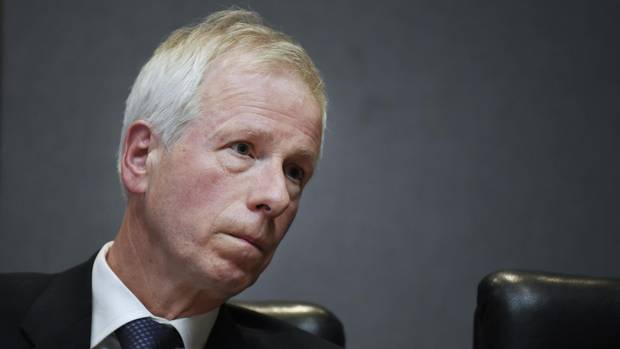
Stéphane Dion, replaced as Canada’s foreign minister by Chrystia Freeland, was a passionate spokesman for a worldwide reduction in greenhouse gases. As Canada prepares to battle Mexico for a special trade deal with the Trump Republican White House, there was no room in Trudeau’s cabinet for a man who believed in doing the right thing regardless of the political cost.

Canada and Mexico could join forces to challenge Donald Trump’s plans for a wall on the Mexican border and a repeal of the North American Free Trade Agreement, but they’re not.

Instead, Justin Trudeau and Enrique Peña Nieto are each lobbying for a special relationship with the U.S. president-elect and both Republican-controlled houses.
To nobody’s surprise, Chrystia Freeland replaces Stéphane Dion as Canada’s foreign affairs minister, while in Mexico, Peña has named Luis Videgaray foreign minister.

There was no way Dion’s environmental baggage could pass inspection in Washington, where fossil fuels are back in fashion and climate-change researchers are updating their resumés. As international trade minister, Freeland rescued a free trade agreement with the 28-country European Union when it looked like it was headed for another Brexit shipwreck. Trudeau advisors Katie Telford and Gerald Butts spent several days last week laying the groundwork for Freeland to connect with Canada’s allies in the Republican-dominated Congress and Senate.

Likewise, Videgaray’s return to cabinet was a pragmatic decision. He quit as Mexico’s finance minister days after Trump’s pre-election visit in September, a visit insiders say Videgaray set up. Once Trump’s election was confirmed, Peña Nieto did what he had to do to reinstall a certified Trump whisperer.

Dion was an easy target. I believe he should have halted the $115 million deal that saw Canadian armed vehicles shipped to Saudi Arabia for use in subjugating its Shiite minority.  I thought he was inept in his refusal to get harsh with the Saudis over the 10-year, 1,000-lashes sentence meted out to blogger Raif Badawi, whose plight and Quebec family convinced me to start blogging.

What I find surprising is Trudeau’s ruthlessness. I recall watching the young MP, a Dion-green scarf around his neck, joining a celebratory conga line to parade the newly elected Liberal leader through Montreal’s Palais de Congrès. That was in 2006. Now that they’re in power, the Liberals would like nothing better than to erase memories of those ideology-driven days in the political weeds. Kyoto? A city in Japan, the name of Dion’s dog. In Trudeau’s comments on the shuffle, he made no mention of Dion’s 21 years – including two years as Liberal leader – as Canada’s voice of environmental responsibility.

In Donald Trump’s post-fact world, this alarms me. Why is Canada so quick to acknowledge the new reality? What priority will Canada’s environmental concerns be given? How will Freeland reconcile Trudeau’s national carbon tax with Canada’s place in the continental supply chain?

The optics aren’t encouraging. For Dion and fellow veteran John McCallum, there were no cabinet openings. McCallum, who as Canada’s immigration minister opened the door to 25,000 Syrian refugees, becomes Canada’s ambassador to China. It’s been variously reported that Dion was offered the ambassadorship to France or Germany, but said he’s reflecting on his options.

I’ve always liked Dion the humanist. Mostly it’s because of his passionate efforts on behalf of those who believe in a united Canada. Thanks to Dion, the Chrétien government adopted the Clarity Act in the wake of the 1998 Supreme Court reference on Quebec’s right to secede unilaterally.

Thanks to Dion, Quebec’s independence movement lost the momentum it might have carried out of the 1995 referendum.

But that was then. Now, Trudeau’s Liberals depend on Quebec for their re-election and the last thing they need is a resurgent PQ under Jean-François Lisée resurrecting old humiliations on Canada’s 150th birthday. Another reason Dion had to go, given that Quebec’s National Assembly voted unanimously for a motion that Quebec, and only Quebec, has a say on future referendums and terms of secession in the event of a yes vote.

I also understand the PM’s need to empty the Liberal closets of noisy, rattling old bones as it heads into a trade war with the world’s greatest consumer nation. Trudeau knows Peña Nieto will play Mexican wages against Canadian social entitlements, Mexican versus Canadian oil, Mexico’s fierce war on drugs versus Canadian cannabis and Canadian needle exchanges. Trump hasn’t even taken power, yet he has the two amigos scrapping on the threat to scrap NAFTA.

Dion exited with a comment I hope Trudeau remembers when it’s his turn to jump.

“I loved politics, especially every time I could make a difference for the benefit of my fellow citizens. I’m leaving filled with energy – renewable. But politics isn’t the only way I can serve my country. Happily.”

Hudson’s true tax load

What is the Town of Hudson’s average tax increase for 2017?

Finance committee mouthpiece Ron Goldenberg told the West Island Gazette the increase was in the neighbourhood of 1.6 per cent on the average home, excluding tariffs. (My boldface).

According to my calculations based on a comparison of the estimated 2016 and 2017 tax bills of nine Hudson homes, the true increase is close to 7%. (See table below)

The 2017 budget establishes four property tax rates – residential (76 cents per $100), agricultural (ditto), non-residential (81.47 cents per $100) and vacant land (91.22 cents per $100).

Then there’s something called the Total Debt Service tax – approximately nine cents per $100. This pays the debt service on 13 loan bylaws covering everything from the new firehall to culvert replacement but excluding water and sewer bylaws.

So all property owners pay two taxes – property tax and that TDS tax. To figure out your property tax bill, multiply your evaluation minus the last two digits by the property tax rate which applies to you. (Example: if your home is evaluated at $459,500, multiply 4595 by .76.) Do the same with the .0885 TDS tax. Add the two to get your basic tax bill.

Which brings us to those tariffs.

Let’s begin with water. Everyone on town water pays three tariffs. One depends on where you live. For most Hudson residents, it’s $137. Hudson Valleys and Alstonvale residents pay $287. West end residents connected to Rigaud’s Pointe à Raquette system pay $$375.

The second tariff ($78 in 2017, $65 last year) covers the debt service on Bylaw 504, which represents most of the roughly $8 million cost of a new well (now failing), the water filtration plant next to Harwood Blvd. west of Cameron and improvements to the town’s aqueducts.

The third tariff ($57 in 2017; $55.40 in 2016) is also levied on every resident on town water. Described as a tariff to repay interest and principal on Bylaw 554, this one is questionable because it relates to both the sewage treatment plant and the water filtration plant.

Next: waste management. The 2017 bill for green and blue box collection is $266 per household, up from $195 in 2016.

Now to sewer tariffs and one of Hudson’s tax fairness issues.

First, the tariffs. Residential property owners pay $314. Businesses pay between $320 and $2,750. For example, most commercial spaces pay the minimum. Hair salons, dry cleaners, pool and spa businesses, caterers and farms pay $470. Bakeries, restaurants, bars, garages and daycares pay $750. Pharmacies and grocery stores pay $2,500. Golf clubs, the yacht club, car washes and the ferry pay $2,750.

Everyone connected to the sewer system also pays $116 to cover the cost of loan Bylaw 505.

Approximately 750 of Hudson’s 2,200 doors are able to connect to the sewer system. That number includes Hudson’s three schools and both downtown churches as well as municipal buildings, but these big users are exempt from all taxes and tariffs. In lieu of taxes, the town gets a pittance from Quebec.
Now, the fairness issue.

Ten years after the sewer system’s completion, a third, or approximately 250 doors, still have not connected. According to Goldenberg, those 250 doors are exempt from sewer tariffs because they choose not to connect. If you knew you could save $436 a year on your tax bill, would you connect?

Despite repeated urgings, three administrations have refused to order reluctant sewer-dwellers to connect. Provincial regulations oblige the town to ensure all septic tanks are pumped out every second year, but many installations are due for replacement. This is why residents of Hazelwood and Kilteevan agreed to loan bylaws that cost homeowners an additional $1,150 and $1,141 respectively. Previous administrations have offered similar options other sectors of the community.

Hudson’s businesses are now on notice that the town proposes to install water meters at the property owner’s expense and tax water consumption.  Goldenberg and town manager J.P. Roy revealed at the December budget evening that the town has no plans to meter water consumption in the residential sector even though it accounts for 95% of the town’s total consumption.

I’ll get to the commercial sector when the town provides me with requested data.

All tax data by address is available online via the town’s website. The following figures are for a sampling of nine homes throughout the municipality.  Figures may be garbled, depending on the platform you’re using.

Address          Valuation         Property tax     Other taxes/tariffs*     % change        Total

Residential/ agricultural                                                                             +6.7% average
Mil rate 2017@.7602/$100
Mil rate 2016@.6973/$100

West end agricultural        $433,800       $3,300                   $650 (6,7)      +6.8% $3,950
2016                                                                  $3,025                   $672                             $3,697

West end                                 $244,900         $1,862                $482 (6,7)         +8% $2,344
2016                                     $1,708                $464                                                             $2,172

West end                    $1,145,900         $8,711                $1,014 (6,7)               +5.8% $9,991
2016                                                           $7,990               $1,455                                      $9,445

Hudson urban                $463,700        $3,525                 $810 (1,3,5,6,7)       +6.8% $4,335
2016                                                             $3,233                 $825                                       $4,058

Hudson urban             $396,900        $3,017                 $889 (1,3,5,6,7)         +5.6%  $3,906
2016                                       $2768                  $850                                                              $3,605

Hudson centre            $440,900      $3,352     $907 (1,2,3,4,5,6,)                  +6.9%  $4,259
2016                                                        $3,074     $909                                                         $3,983

Hudson urban                      $533,000       $4,052               $910 (1,3,5,6,7)        +7% $4,962
2016                                                              $3,716                    $901                                     $4,617

* Other residential taxes/tariffs

1: Water networks tariffs: Urban, $136.96; Hudson Valleys, $286.57; Pointe à Raquette, $375
2016: $97.50; Hudson Valleys, $408.50; Pointe à Raquette, $331.73
2: Urban sewer network tariff $314
2016: $345
3: Bylaw 504 (water) $78
2016: $65
4: Bylaw 505 (sewer) $116
2016: $108.62
5: Bylaw 554 (sewage, water treatment operational activities) $56.53
2106: $55.40
6: Total debt service (13 other loan bylaws) @$.0885/$100
2016: @.11/$100
7: trash and recycling $266
2016: $195

Trump’s MTTI

yzsguoThere’s a term in the data transfer industry: Mean time to innocence, or MTTI.
MTTI is defined as the length of time needed for a networking organization to prove it is not causing performance degradation on the internet or worldwide web.

Or in the case of Putin’s alleged U.S. political hacks, the time it will take to prove Russian agencies aren’t responsible for the dirty tricks the Obama administration is blaming them for.

Every day, President-elect Trump looks more like Putin’s dupe, lickspittle, dogsbody, stooge, patsy, puppet, pussy, bitch, take your pick. At today’s Senate armed services hearings on cybersecurity, senior U.S. intelligence officials from the CIA, armed forces and the Department of Homeland Security and senators from both parties were unanimous in affirming findings by the nation’s top intel advisors that the Russkies hacked and leaked Dem emails and planted fake news to change the outcome of the U.S. presidential election.

The stateless freelance intel community isn’t so sure, mainly because last week’s CIA/DHS analysis was a dog’s breakfast of any crap they could come up with on short notice. Hit with the bureaucratic equivalent of the kitchen sink, non-aligned data druids had a tough time figuring out what the doc was trying to say, let alone judge it on merits.

Today’s witnesses all but admitted their initial report was over the top and promised  specific proof next week. It’ll be a tough sell to the hyper-skeptical hack community, especially after today’s Senate hearings singled out Julian Assange, the Wikileaks founder living in exile in the Ecuadorean embassy in London, as a liar.

Here’s the fun part. America’s top intel brass meets tomorrow (Friday) with the President-elect after meeting with Obama today. They’re already on record that the outgoing president hasn’t done enough, so what will their reaction be when Trump asks them to prove it?

Answer: it doesn’t matter. Putin is already the winner in this game of chicken. Obama expelled Russky operatives and closed two of their spy nests, so what did Putin do? Invited their opposite numbers to a Moscow New Year’s Eve bash. Muscovites kill for those invites.

The Republicans on the committee know all this, so tomorrow’s get-together isn’t about selling the President-elect on that which he chooses not to believe.

This is a Trump loyalty test: how can he disbelieve America’s spymasters without looking like he’s in Putin’s pocket?

When it comes to Putin and Mother Russia, Donald S. Trump’s MTTI is approaching infinity.

Downtown, downtown update:


img_0770
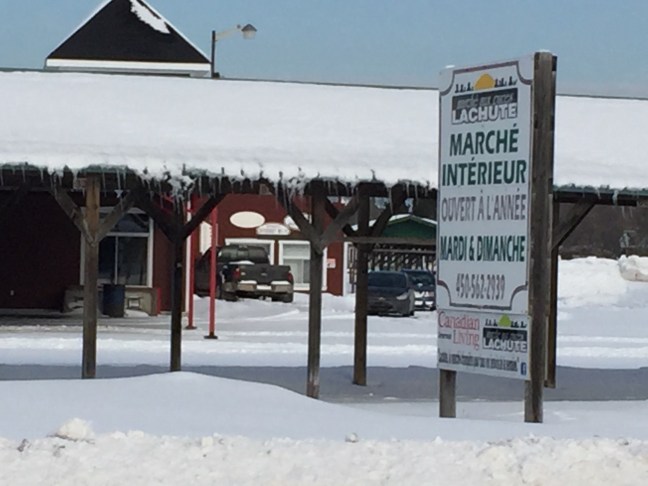
Lachute’s year-round covered market greets visitors and residents. A covered market, similar to those found in a growing number of Quebec municipalities, was one of the ideas proposed by former mayor Michael Elliott. The proposal never made it onto the strategic planning list of priorities. Instead, Hudson’s administration is offering the use of town land opposite Thompson Park to a microfarming co-op in exchange for their promise to find a source of water – in the sector that isn’t supplied with town water.

Lachute’s SDC was often cited as an example during discussions about the creation of a Hudson SDC.

Lachute’s SDC was dissolved last year because business owners were fed up with being forced to pay for an organization that existed for the sake of having an SDC. To fill the need, Argenteuil County businesses reactivated an existing Lachute chamber of commerce and turned it into a regional association. Membership is voluntary and inexpensive. A self-employed person pays $115. A business pays $175 regardless of its size. Members receive all the benefits of an association – group insurance, credit card discounts and other benefits accruing from being a part of the provincial Fédération des chambres de commerce du Quebec (FCCQ)

Hudson was offered the opportunity to join the Vaudreuil-Soulanges Chambre de commerce et d’industrie (CCIVS). Among its many services to members: breakfast meetings where new members can present their businesses and all those FCCQ benefits. CCIVS self-finances by hosting a calendar of  events and operating the SAAQ licence and registration bureau on Cité-des-Jeunes. Last year, it cleared more than $400,000 from the SAAQ operation on a total budget of almost $700,000 and posted an operating surplus of over $80,000.

Yes, the CCIVS posts its financial statements online, with statements dating back to 2010. As of this morning, Hudson SDC financial statements are a closely guarded secret in clear violation of the section of Quebec’s Cities and Towns Act pertaining to SDCs.

Downtown, downtown…

dsc_0284
Hudson’s businesses pay more for water as a percentage of their tax bill than any other sector of town. Yet according to the town’s own data, the town centre uses a third of the water consumed by Hudson Valleys and Alstonvale. Why is the town refusing to meter residential users?

Former interim Hudson mayor Diane Piacente (Politics 93) neglects to mention in her demand for tax fairness for west end residents that she heads the Société de developpement commercial Hudson (SDC), an organization which exists on a $200 tax illegally collected from approximately 100 businesses and commercial landlords.

What makes this illegitimate tax particularly unfair is that it does nothing to help the people who pay it and adds to the financial burden on Hudson’s business owners. That tax load, already heavier as a percentage of total evaluation than in any other sector of town, will increase as the current administration moves on a vow to install water meters in businesses and charge owners on the water they consume.

The town has refused to consider installing water meters in residences even though its own data shows the residential sector uses by far the greatest amount of town water – and the town’s west end is home to Hudson’s star water hogs.

How do we know that? Hudson residents who volunteered for this council’s strategic planning committee looking at the water issue learned from the town’s water technician that Alstonvale and Hudson Valleys consume three times the amount of water used by the centre of Hudson. One participant told me the technician held up his smartphone so the committee could see how the town is able to monitor real-time usage and compare it with archival data.”We saw how it spiked when Alstonvale’s sprinklers went on,” said another.

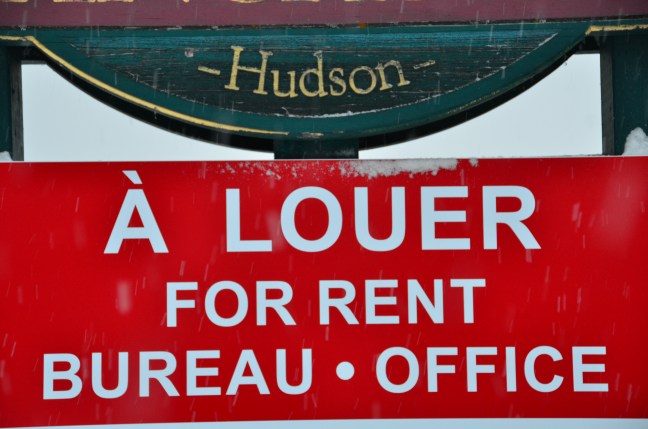
As for the SDC, what began as a vote of faith by Hudson’s businesses has become another tax grab, with For Rent and For Sale signs throughout Hudson’s commercial district bearing witness to the SDC’s failure to fulfil its mandate.

The discussions that led to the creation of the SDC Hudson began in 2011, involving Hudson business owners and the CLD Vaudreuil-Soulanges, a provincially mandated regional business development organization.

Their aim: create a local business development organization to attract new business and clientele and lobby for Hudson’s business community. A part-time marketing coordinator would be hired to work with local merchants and organizations to sell the town. Those around the table, including Piacente, agreed the SDC would have to earn its keep or be dissolved.

In September 2013 Hudson’s SDC received its authorization from Quebec (Loi sur les cités et villes, RLRQ. C.C-19) after only one business – the SAQ – signed a referendum opposing its creation. Membership is mandatory for the roughly 100 businesses located in Hudson’s commercial district. These businesses are each assessed $200 annually. Hudson businesses outside the core are eligible to join the SDC by paying the $200 but membership isn’t mandatory.

Under the aforementioned Cities and Towns Act, the SDC has no authority to collect property taxes. So the Town of Hudson collects the $200 per business and remits it to the SDC, minus the cost of collection. The Town MAY match – but can never exceed – the amount collected (Article 1982,c.65,s.2, 1993, c.3, s.102).

dsc_0287
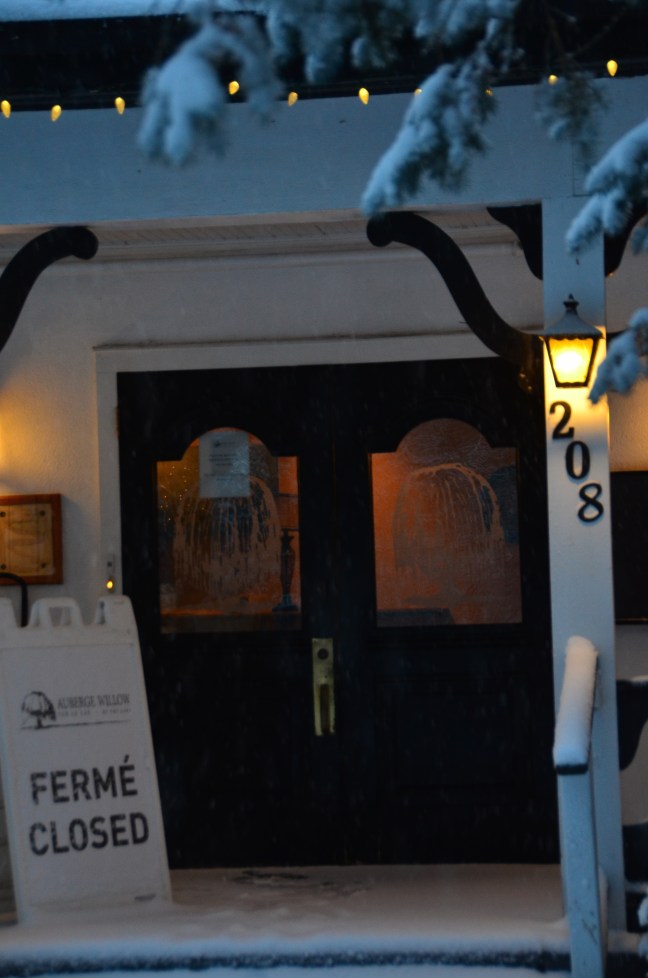
Hudson’s iconic Willow Inn closed its doors in November. Has the SDC lifted a finger to help attract and work with potential buyers?

In the 40 months since Hudson’s SDC came into being,

– Has it attracted new businesses or more traffic?
– Does it lobby on behalf of the business community’s interests?
– What has it done to revitalize the commercial core?
– How much has it taken in? From who? How much has it spent? On what?

According to Articles 458.23 and 458.24 of the Cities and Towns Act, the Hudson SDC no longer has the right to receive and spend tax dollars. It is supposed to be administered by a volunteer board of directors composed of nine members.Board members must be Hudson business owners or representatives, in good standing (having paid their business and SDC taxes). Six are to be elected by the SDC membership. Two, including one representative from the Town of Hudson, are to be appointed by the elected board. The board elects the president, the vice-president, the treasurer and the secretary. Mandates are for two years.

Yet according to the Quebec business registry (REQ) as of Jan. 2, SDC Hudson’s board of directors consists of president Diane Piacente and two St. Lazare residents who operate businesses in Hudson. The town representative on the SDC board says the organization has failed to achieve a quorum at its AGMs. Without a quorum, how could the SDC elect an executive? Does Piacente own a or operate a business in the core? Has she paid her $200?

Notwithstanding questions as to its legitimacy, the SDC continues to adopt budgets and accept and spend monies collected by the town on its behalf. It’s possible the town may have violated the Cities and Towns Act by subsidizing the SDC. In October, councillor Nicole Durand revealed the town had advanced the SDC $17,000 even though the total collected to date stood at $13,000. (We’re told the shortfall has since been covered, with the municipality reportedly placing unpaid SDC bills in collection because people are refusing to pay.)

By law the SDC must produce a financial statement (Cities and Towns Act, Art. 458.25). I requested SDC financial statements from the town and was told to ask the SDC. The SDC refuses to release its annual reports and financial statements except at its AGM and doesn’t make them available on its website or Facebook page.

One of the SDC’s mandates was to lobby on behalf of the business community.  A year ago this month, business owners were informed the town would no longer be charging occupants a business tax. Instead, the owners of commercially zoned properties would be charged a non-residential property tax. Overnight, landlords were responsible for collecting each tenant’s share, either hiking rents or swallowing the difference.

The SDC’s silence on that and other issues involving the business sector says it all.

In 2017, the non-residential tax rate increases to 81.47 cents per $100 evaluation from 74.73 cents in 2016. (This seems to be in line with commercial/non-commercial mil rate ratios in most Quebec municipalities without significant commercial or industrial tax bases.) Even with the jump, tax revenues from the commercial sector represent 4% of Hudson’s total tax base.

But, as the TV ads say, that’s not all. Businesses must cough up water network tariffs of between $350 and $2,750. (It’s $136 residential; $286 for Hudson Valleys and $375 for west end residents served by Rigaud’s Pointe à Raquette well.) Then there’s the sewer tariff: $314 for residential users connected to a sewer, compared to $320 to $2,700 for commercial. On top of that, add tariffs for Bylaws 504, 505 and 554 and the 9-cents-per-$100-evaluation total debt service tax on everything from the firehall to road repairs that everybody pays.

The imposition of water meters on Hudson businesses is another tax grab, but has the SDC spoken out? Again, no.

The SDC’s refusal to release financial statements is as troubling as its failure to speak out on behalf of the businesses who pay for its existence. If the SDC was pulling in the business, it would be a different matter, but it isn’t. Squandering thousands on another shop-local marketing campaign isn’t the answer.

I find myself wondering why the town would continue to support an organization that has almost no participation or support from its business community. I suspect it’s because this administration is using some of the money it collects on the SDC’s behalf to cover the cost of events the town – and therefore all Hudson taxpayers – traditionally paid for. If that isn’t illegal it should be.

I say dissolve the SDC and save businesses the $200. They’ll need it for the water meters.


Moderator’s note:

When I launched Thousandlashes.ca, one of my core principles was that a worthwhile discussion must be based on an agreed-on set of facts. The Brexit debate and Trump’s election have shown us what can happen when people are allowed to post false or misleading news.

As this site’s moderator, I will continue to delay posting anything I feel contains false or misleading facts until I have had the opportunity to verify them. Only then will I approve the post along with a moderator’s note relating to the questionable information.

Opinion will always be welcome.

It has been suggested that anyone posting on this site should use his or her own name. I’m  open to both points of view.– Jim Duff

Dare to compare

I daresay it’s futile to compare municipal budgets, but here goes. On Tuesday, St. Lazare adopted its 2017 budget.  Our neighbour, with a population of in excess of 20,000, will spend $28,375,500 next year. The average St. Lazare home, valued at $370,000, will cost its owner 1.26 per cent more next year in taxes. As Mayor Robert Grimaudo points out, this is less than Canada’s inflation rate.

It’s good but it’s not the best. Earlier this month, Vaudreuil-Dorion, with a population of close to 45,000, adopted a $72 million budget. Nine times Hudson’s population, six times the budget. The average home, evaluated at $309,700, saw its taxes go up by half a percent. That’s a $7 increase.

artistes-talents-d-ici-vaudreuil-dorion-vaudreuil-soulanges-jardin-de-lumieres-lanternes_orig
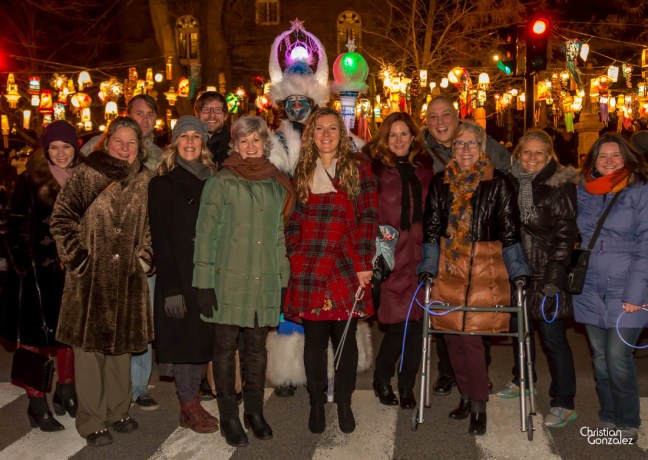
Artists from throughout Vaudreuil-Soulanges gather to celebrate the illumination of 300 lanterns outside the beautiful église Saint-Michel in Vaudreuil. It’s a spectacularly uplifting display on this, the darkest night of the year and a good reason to drop by Hudson’s big neighbour.

Oh yeah. Vaudreuil-Dorion has that massive commercial core (where I see most Hudsonites doing their shopping). It has those industrial parks, that monstrous tax base, that population. Sometimes, when I hear Hudson folks running Vaudreuil-Dorion down, I wonder whether they’re talking about the same place. I find Vaudreuil-Dorion an exciting, even beautiful city. It may lack trees and dog runs, but it more than makes up for the shortage of natural settings with its energy and vitality – and above all, the dedication of its mayors Réjean Boyer and Guy Pilon and their respective councils to the concept of a 10, 20, 30-year game plan.

St. Lazare may not have Vaudreuil-Dorion’s tax base but it has learned over the years to manage its cash flow (http://ville.saint-lazare.qc.ca/budget). The new city hall going up across from the sports complex won’t figure in the 2017 tax bills, but the $3.8 million in subsidies for the new firehall and community facilities will lighten the burden. The resurgence in the real estate market has generated welcome taxes to defray the cost of new sanitary and storm sewers, aqueducts and beefed-up public security. There’s cash for repaving streets and building bike paths to meet the demands of a young, active population (the city’s eighth school is nearing completion). If St. Lazare was a family, we’d say they were living within their means.

Hudson isn’t.

Here’s another number to compare: This year’s St. Lazare recreation department budget is a little less than $4.5 million. Hudson, which marries recreation and culture, will spend slightly more than $1.5 million. I know I’m comparing ants and aardvarks, but I just can’t help pointing out that spending doesn’t guarantee quality.

What does Hudson have that St. Lazare and Vaudreuil-Dorion don’t? Our region’s only English-language high school. Bilingual status. A spectacular waterfront with a view that millionaires crave. A compact town centre where everything is within walking distance. World-class entrepreneurs and venture capitalists. Venerable clubs.

So here’s my question: Why is Hudson not doing a better job of marketing to the world? From the little I’ve seen, Hudson isn’t getting much bang for its buck. Craft fairs, hired celebrities, improvised parades and garage sales don’t cut it. It’s time for some new thinking – and that doesn’t mean record budgets. Even if you’ve got the money those days are done.


Stop them before they spend again!

duffs-corners
Is it just me, or has Hudson’s council lost touch with reality?

Would that Hudson’s Mayor Ed Prévost’s fondness for invoking Donald Trump have extended to the U.S. President-elect’s professed concern for the overburdened middle class. Prévost oversaw the adoption of a $13.2 million 2017 budget Wednesday evening, a 9.4  percent increase over last year’s record $12 million exercise.

Most of the 60 or so residents in the hall appeared stunned before giving vent to their frustration and bafflement at the magnitude of the increase, given this administration’s comments over the past several months hinting at a surplus. Many showed up hoping for a tax freeze; instead, the tax-and-tariff burden on the hypothetical average Hudson home with a valuation of $400,000 will increase by about $200 or approximately 5 per cent.

Because next year’s budget is based on a new valuation roll, sectors of town which have seen significant real estate activity will see their evaluations – and their taxes – increase by as much as 30 per cent.

Residents didn’t take kindly to this administration’s tax-and-spend budget. Councillor Ron Goldenberg noted operating costs were down 4 per cent and said the budgeteers had whacked a million dollars from the first draft. It was all in vain, especially after council went on to announce the hiring of  a full-time grants-and-subsidies chaser for $100,000 and a full-time culture and communications director.

Intense questioning pried loose the revelation that the town, with a population of just over 5,100, now employs more than 140 full and part-time employees. Of those, 36 are full time employees, although an oblique reference to disciplinary measures in regards to Employee 647 suggests another of a previous administration’s hires is caught in Hudson town hall’s deadly revolving door.

Administrative costs will rise by another 20 per cent next year to just under $2 million. Public security costs skyrocket by a whopping 65 per cent to just under $2.5 million. Conversely, four budget items shrank from last year – public works, public transportation, urban planning/economic development and financing costs.

To be fair, some of next year’s big numbers reflect bookkeeping changes – understandable given that this budget was prepared without the assistance of former treasurer Serge Raymond, the town’s fourth in three years.

And there was good news. The town starts 2017 with $23.4 million in long-term debt, down significantly from the $32.5 million the town owed back in 2013. Clearly, this has been the biggest single accomplishment of the Prévost administration. Ditto the announcement of an eight-year contract with town employees, retroactive to 2014 when the last collective agreement expired.

But residents weren’t in the mood to cheer, especially when they were presented with this administration’s 2017-2019 PTI, or capital investment plan, a wish list of projects with a $9.9 million price tag. Some, like a newwell to relieve pressure on the town’s current drinking water sources, are seen as inevitable, although many residents still can’t understand why the town doesn’t consider drawing water from the Lake of Two Mountains. Other projects on the wish list, like a skate park and an arts centre, aren’t seen as priorities when the town’s streets and sidewalks are disintegrating. It was revealed this would be the third time the town has invested in a skate park only to see it unused.

At one point during the PTI discussion, Goldenberg let it slip the town would be installing water meters in the town’s businesses, which collectively represent barely 4 per cent of the town’s total tax revenue. Businesses already pay the lion’s share of the bill for water and sewerage according to a tariff structure unrelated to how much water a business consumes. This blurt led to an animated discussion of Goldenberg’s promise to businesses that a sampling of residences would also be metered to give everyone a better idea of the residence/business water consumption ratio. As tempers flared, town manager Jean-Pierre Roy told one business owner that not only would businesses be forced to install meters, but they would foot the bill for the installation and hiring of the meter reader.

The crowd thinned as the back-to-back budget meetings dragged on for more than three hours with only the occasional outburst to snap people awake. One such moment came during a routine zoning-bylaw presentation, when former mayor Liz Corker suggested the town should demand more greenspace from Hudson Valleys developer Daniel Rodrigue in return for the right to rezone lots on Mayfair to allow semi-detached housing. Rodrigue loudly insisted he’s given far more than he was required to do and countered by referring to the circumstances under which one of Corker’s properties was developed during her time as mayor.  It was like watching two members of a dysfunctional family venting in public; those who knew the back stories stared at the floor while those that didn’t watched in bewilderment.

Somehow, the discussion morphed into a debate about Hudson’s unenforced leash laws. Rodrigue’s development is bordered by the Gary Cirko Trail, where dog owners from as far away as the West Island come to exercise their animals on the public trail network. Before council voted on the proposal’s first reading, a succession of residents challenged the zoning procedure, questioned the town’s motives in presenting the requested change (by law, the town must) and voiced concern that a project good for the town might be killed because Hudson doesn’t enforce its leash laws.

Best comment of the evening: Trevor Smith, who asked council whether they had ever considered cutting expenses to the bone and giving back to residents in the form of a tax break. Smith didn’t wait for an answer but he got one anyway: smirks from a couple of those at the front of the room. It’s pretty obvious this administration won’t stop spending until they’re booted out of office next November.


Shameless

Whatever the mayor, council and administrators tell residents at tonight’s 2017 budget adoption, the Town of Hudson’s current financial situation doesn’t justify an increase in property taxes.

Unless it’s been misrepresented.

At the end of April, former treasurer Serge Raymond prepared a document required by the Cities and Towns Act. It’s called a report on the comparative statements of revenues and expenditures. It’s the fiscal equivalent of your vehicle’s odometer, fuel economy and mileage readouts.

One of the two statements compares revenues and expenditures for the current fiscal year with those covering the same period of the previous year. The second compares actual versus forecasted revenues and expenditures for the current year.

Total revenues budgeted for 2016: $12,053,290.
Raymond’s 2016 forecast four months into the fiscal year: $12,438,740.
In other words, Raymond’s numbers – with eight months still to go — showed the town $385,450 ahead of budget projections.

On that basis, Raymond forecast a 2016 budget surplus of $307,590.

Major contributing factors: the $220,000 sale of the old medi-centre at 98 Cameron, new residential construction and better than expected home resales. No wonder this administration has made densification Job #1.

The positive revenue trend continued throughout 2016. At the October council meeting the mayor revealed welcome taxes topped $471,000 as of September, with four months still to run. (The town had budgeted $450,000 for all of 2016.)

The only bad news in Roy’s report was an $89,860 excess in expenditures over budget. He cited legal fees, business tax bad debts and an increase in the town’s public transit assessment. From what the administration has admitted since then, it’s quite possible legal costs will consume most of Roy’s projected surplus.

Nevertheless, the town’s own projections rule out a reduction in revenues as a factor in any tax increase.

We can also rule out a reduction in total valuation. As I posted in my last blog Fabrication, the global 2017 valuation is $1.184 billion, up from last year’s $1.178 billion. The value of taxable properties increased by a similar amount – from $1.107 billion to $1.114 billion. In fiscal terms both increases are negligible, so this isn’t a significant factor in the 2017 budget.

The biggest problem facing this administration in the 2017 budget is the gross and growing unfairness of the tax burden on Hudson’s commercial core.

In January, the town informed business owners it was ending the business tax and replacing it with a higher tax rate on non-residential properties. Henceforth, non-residential properties would be taxed at 75 cents per $100 compared to 70 cents per $100 for residential properties. Commercial landlords became the town’s tax collectors.

The higher tax rate would have been acceptable to most non-residential property owners but it was just the beginning of this administration’s tax grab. The 2016 budget replaced taxes with a blizzard of tariffs that bore no relationship to the actual cost of providing services. Small businesses with a single bathroom and kitchenette end up paying triple of what the owner of a typical home pays for water and waste management. The concept of user pay was evoked by this administration during the debate about water meters, but it would apply only to businesses in the sewered core.

The results of that inequity are visible throughout Hudson’s commercial core. Even the Societé de developpement commercial (SDC), created as a marketing tool for local business, has morphed into another ineffectual, unaccountable tax-grabbing arm of the town.

The solution lies in a fair and equitable tax and tariff structure based on real costs. However I have no illusions about this administration lifting a finger to assist Hudson’s struggling commercial core. This mayor and council have been successful in using arbitrary tariffs and grossly unfair tax policy to divide and conquer. After three years of this, it’s clear they feel no shame.