
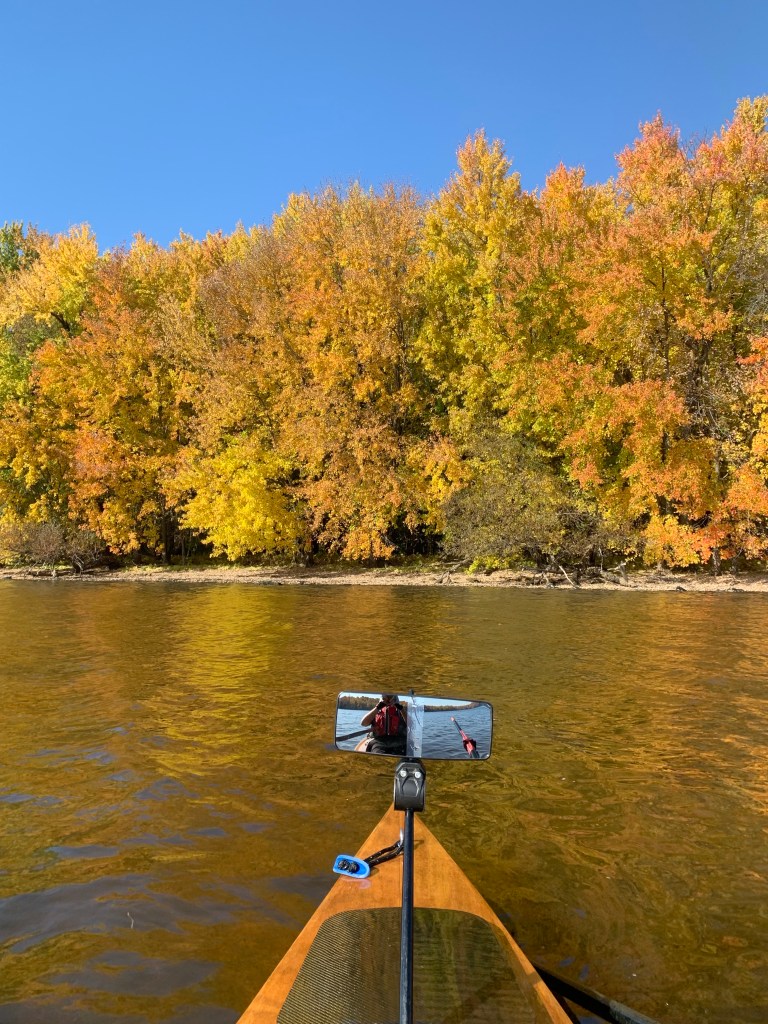
Earlier this week I took my boat upriver on a late-season camping trip to the islands, bays and wild spaces below the Carillon hydro dam. I began these forays when I was in my teens, drawn by the pull of wetland wilderness. I would make camp on one of the sandbars and beaches.
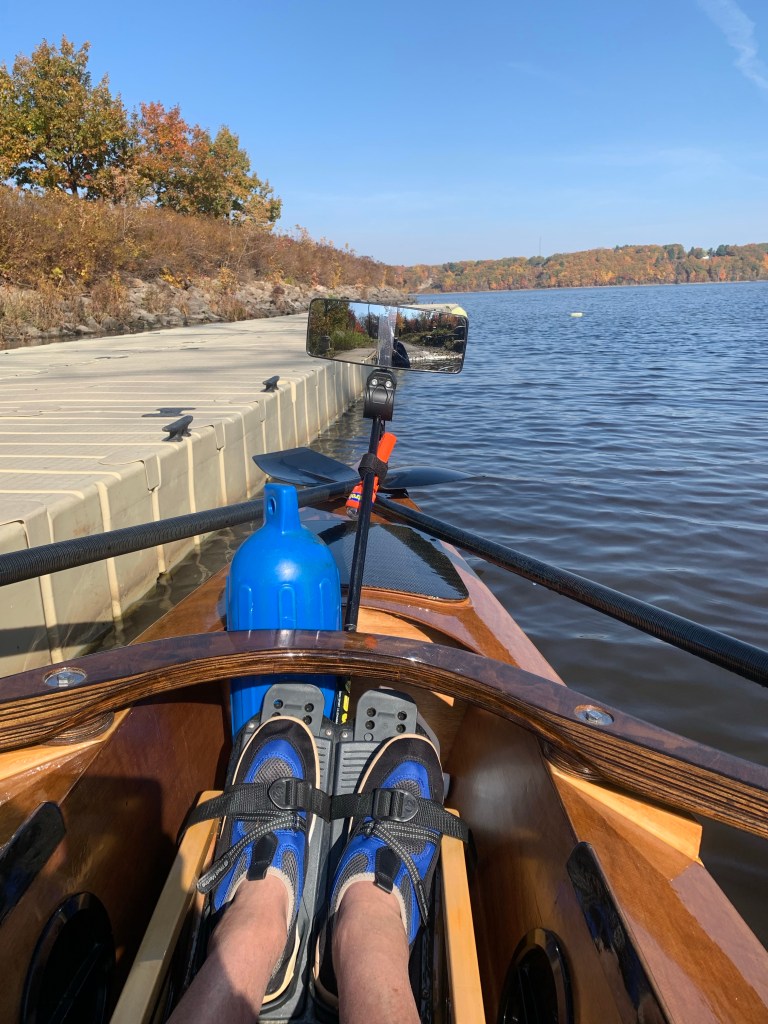
In late October, the only boats on the water are the fisherfolk and my 18-foot Angus Expedition, a rough-water sliding-seat rowboat designed by B.C.’s Colin and Julie Angus. In the hold are my tent hammock, sleeping bag, cooking gear, food and water, plus extra kit in case of a turn in the weather. In my lifejacket I carry a handheld VHF radio (the fisherfolk always have their ears on), strobe, cellphone (music!) and survival basics. As Coast Guard rescue jumpers put it, if you’re not wearing it you don’t have it.
Louise pushed me off from the Jack Layton Park dock before 8 a.m. The forecast was sunny and breezy, with winds from the southwest between 20 and 40 km/hr., so I hugged the Hudson and Rigaud shorelines to take advantage of the shelter they provided from the wind. Waterfront mansions gave way to modest cottages, many raised or on stilts after the epic 2017 and 2019 floods.
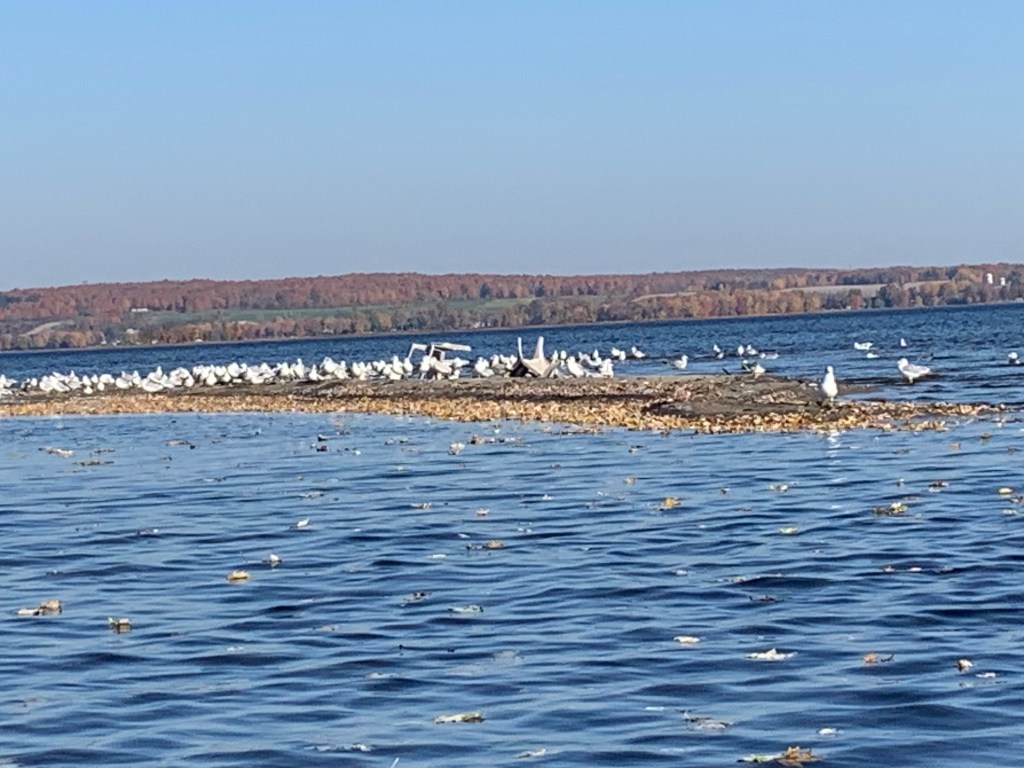
The Raquette estuary marks the division between civilization and wilderness. The gulls have now taken over the sandbar since my last visit in 2020; they sounded a raucous alarm as I rowed past. Around the next promentory was a surprise — a quiet bay, bisected by a manmade peninsula and at its end, a stone cottage, clearly predating environment ministry edicts about what one can and can’t do in a floodplain. It’s boarded up for the season but in good repair. I can understand why someone would want that view, across the Lake of Two Mountains to the westernmost mount the Mohawks believe is sacred.
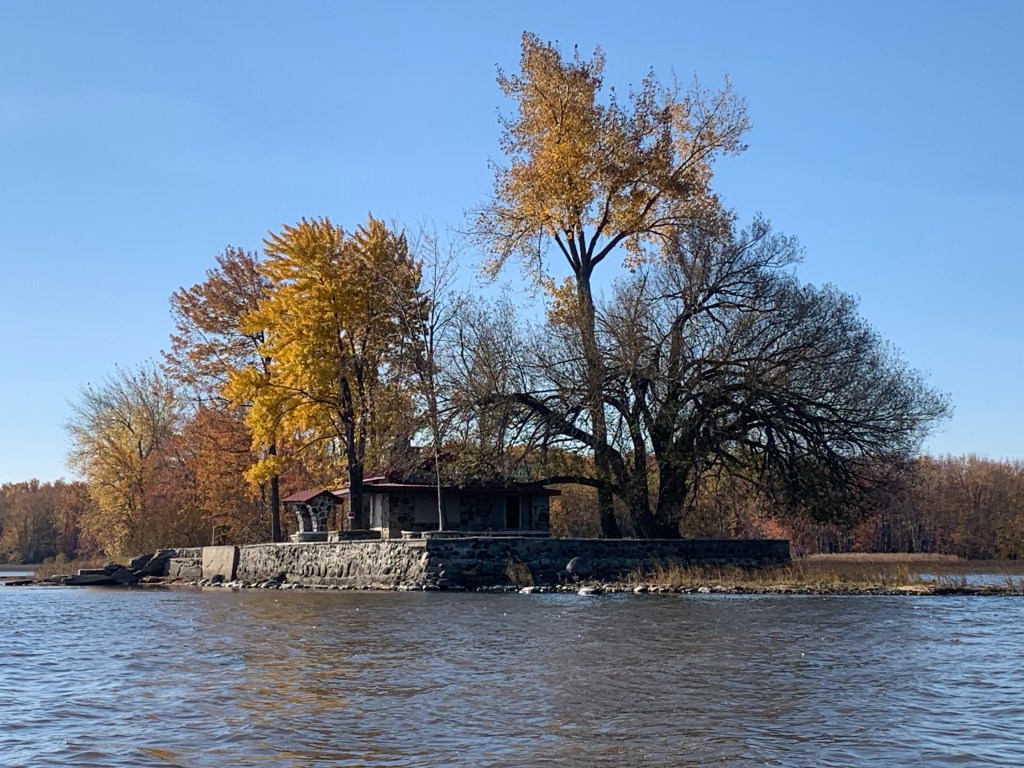
I continued upriver, past Rigaud’s Grand Quai, clusters of waterfront homes where residents continue their struggle against the river and the environment ministry’s latest floodplain map. Many are either raised or armoured against flood-borne ice with breakwaters. The goal is finding ways to prevent Quebec from justifying demolition of one’s home if it is seriously damaged in the next flood.
Four hours after pushing off from the JLP dock, I rounded the corner at the upper end of Carillon Island. This marks the junction of three rivers where the fluorescent yellow Rigaud and the polluted North River both discharge into the Ottawa, relatively clear after its trip through Hydro Quebec’s turbines.
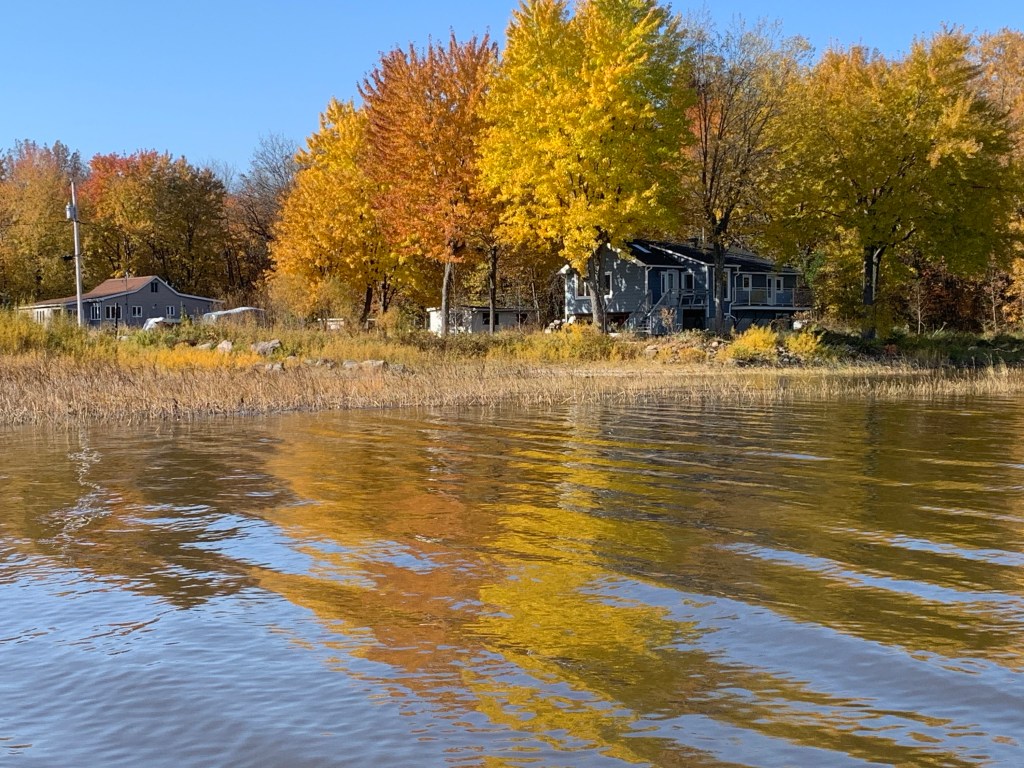
Ten kilometres long, less than a kilometre at its widest, Carillon Island has three faces. The south side is a primal forest of trees in riotous fall colours. There’s no evidence of human habitation.It’s another story on the north side, where well-kept summer chalets are perched well above the highest floodline and rough-hewn shanties taking their chances. There’s an underwater electrical cable to the island, so I suppose one could live here year-round.
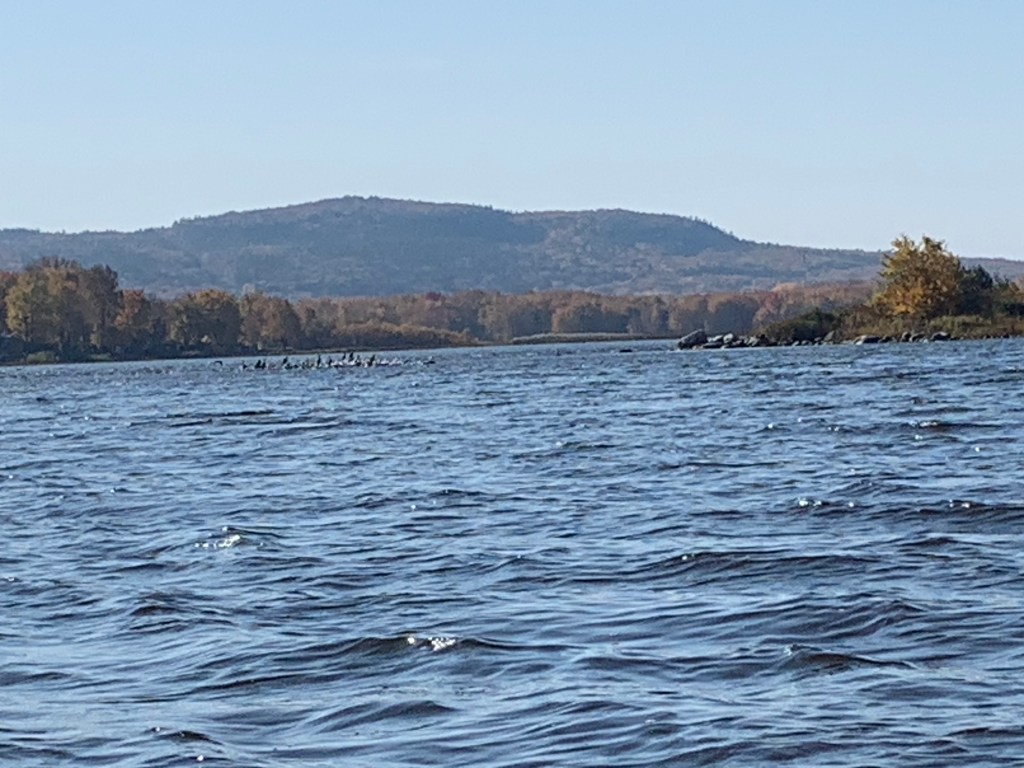
Emergency access is the dealbreaker. There’s an old concrete dock, but no indication it’s still in use. In the four months between freezeup and thaw, access by water isn’t possible. In the 19th century, inhabitants risked their lives crossing the ice to Terrasse Robillard on the north side or to Rigaud Bay to the southwest. With the advent of warmer winters and thinner ice, I’m not sure it’s any different with snowmobiles and ATVs.
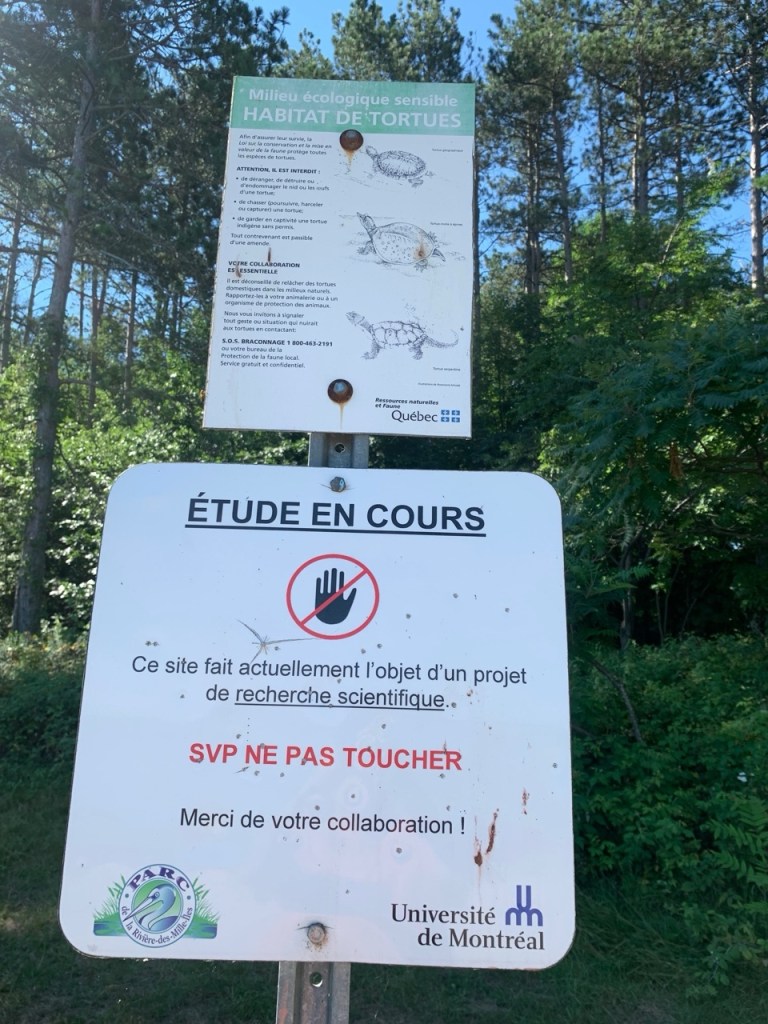
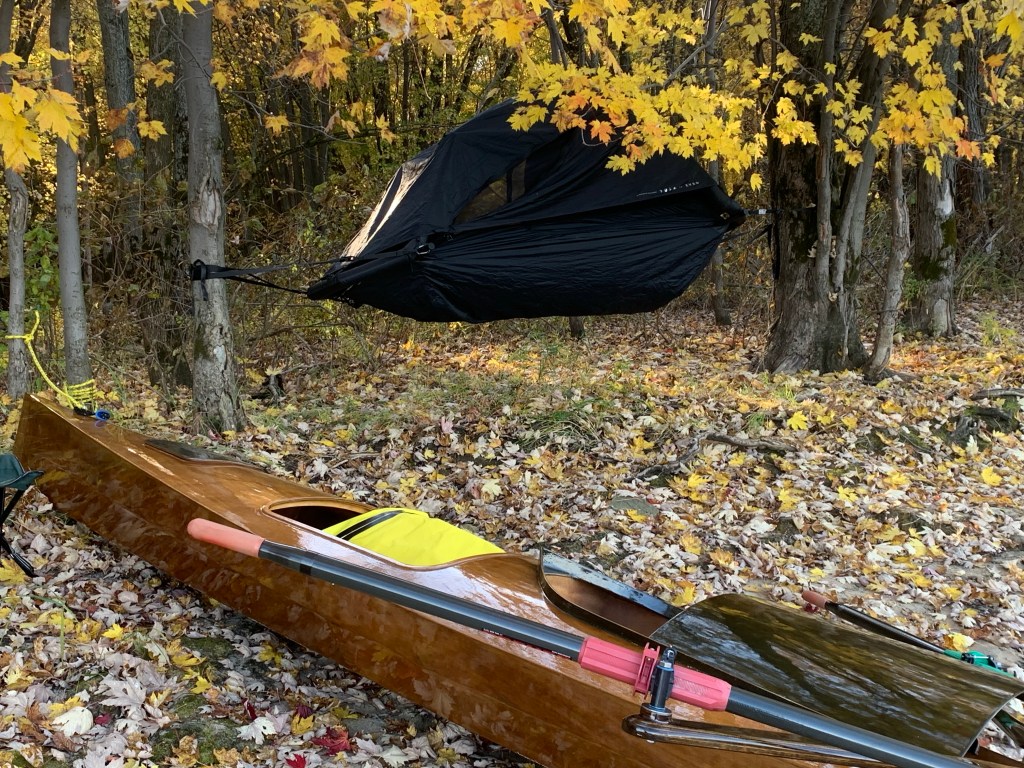
My destination for the night — Carillon Island’s migratory bird sanctuary at the eastern end of the island. It’s a kilometre from the closest habitation, with an ATV track to the main beach and a collection of broken chairs and fire rings where the summer folk party. I found a cozy cove a fair distance from partyville where I could pull Gus well up on the beach and pitch my tent hammock five feet away. Perfect — as long as one can live with the avian party going on.
Every year at this time, massive flocks of Canada geese, ducks and other wildfowl home in on Horseshoe and Carillon bays. Late into the night, one is treated to the sound of excited birds welcoming their relatives at they fly in long past dark. After sunup, they spread out to fatten up on acres of ripe duck corn for the next leg of their migration.
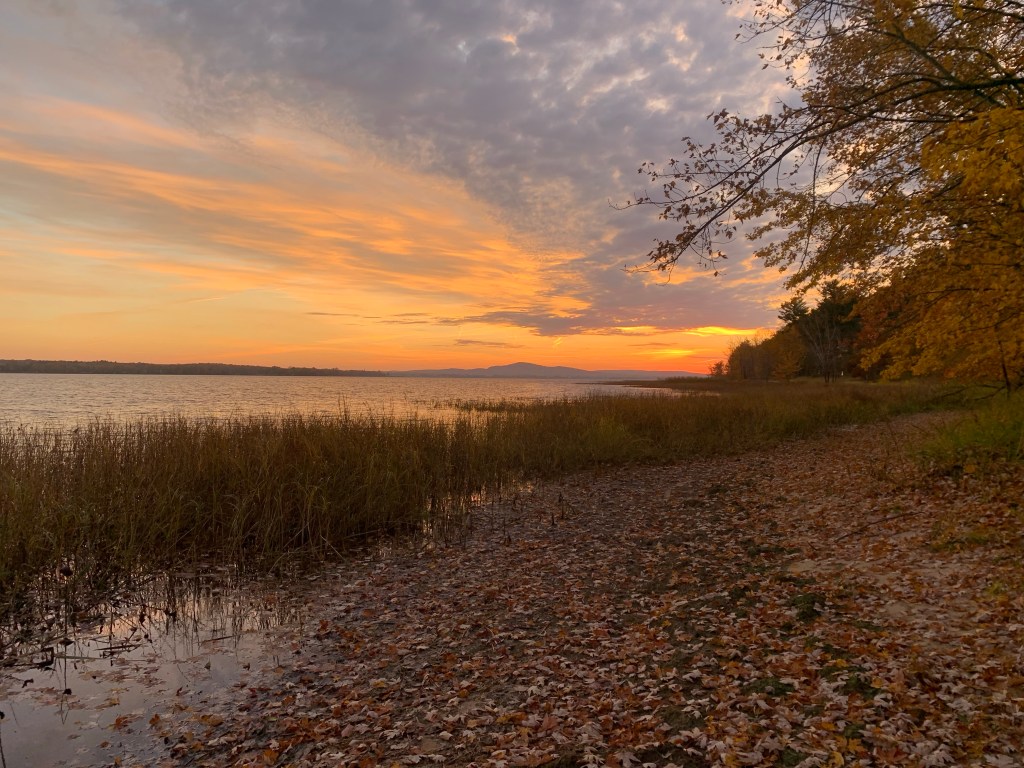
Sundown was blessedly bug-free but the October chill brought out a puffer jacket as I heated up Louise’s chili. After 25 kilometres of rowing against a headwind, I was ready for my sleeping bag before 8 p.m.
Morning brought another surprise. Overnight, the wind had shifted 180 degrees. Now it was out of the northeast, straight into my face on the row back to Hudson. Wind against current equals shorter, steeper waves. I girded for the pull with oatmeal, homemade beef jerky and a pot of strong coffee before loading everything into Gus and pushing off.
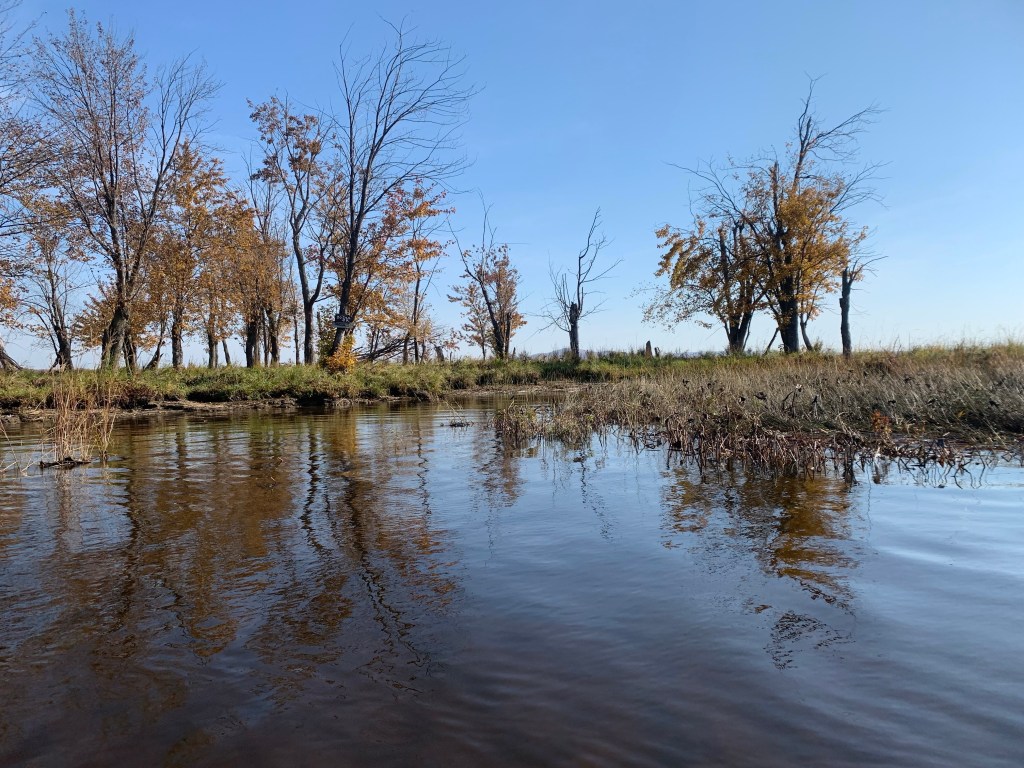
In a small boat, one looks to minimize the effects of wind and wave, which meant following the line of weedy sandbars and islets stretching from the foot of Carillon Island through the Pelleys to Hay Island, then across the south channel to Graham Island, a rocky outcrop off Hudson’s Rousseau St. Four hours and 22 kilometres after starting out, I pulled up to the JLP dock where Louise was waiting to stand watch on Gus while I went home to get the trailer.
°°°°°°
This isn’t everyone’s idea of a good time. A good boat and equipment are prerequisites, plus It’s a fair amount of work. The payback is a winter’s worth of memories — the sight of a massive orange hunter’s moon rising above the sacred mountain, the indescribable emotion of being far from civilization yet close to home. Even the sound of excited geese.
As this world grows crazier and less hospitable, short escapes to wild places will grow in importance. By all means, write and enforce rules needed to protect them from overcrowding and vandalism, but don’t put them beyond the reach of those without the means.
 thousandlashesdotca
That’s a beautiful account. Is that tent/hammock one of those suspended from each end set-ups? Do you find it comfortable? Wind and rainproof? Easy to get in and out (thinking midnight forays into the bush for hydraulic relief …)? I’ve seen them advertised but wonder about back sagging as is common with hammocks.
Your skiff also looks beautiful, but perhaps short on storage area. No leaks, I hope. That trip is also really good exercise while providing enjoyment of changing scenery.
LikeLiked by 1 person
The EXOD Monolith was designed in France, otiginally as a solo motorcycle camping shelter. I’ve used it both on the ground and airborne. Like any hammock it is dependent on the placement and size of trees but the attachment system allows one to use boulders or even a vehicle trailer hitch in a pinch.
The major differences are the inflatable airframe that holds up the tent and two extendable carbon fibre tensioning bars that keep the floor flat when it’s in the air. I find it incredibly comfortable and stable as long as the straps and tensioners are properly set up. One can either sleep
under the stars with just a bug net or zip up the flysheet for a warm, windproof and waterproof night. There’s a steep learning curve in setting up and striking it, plus it’s heavier than my Marmot two-person.
The boat is bigger than it looks and can carry 200 pounds of gear — including a midsize mountain bike and collapsible trailer — without an appreciable drop in speed.
LikeLike