
There’s that ancient joke about the guy who prays to win the lottery. Week after week, he lists his financial problems and repeats his plea for divine intervention. As time goes by, his prayers grow bitter with recrimination until one day, the skies open, the clouds part and the Voice of G-d roars “YOU WANT ME TO HELP YOU? BUY A TICKET!”
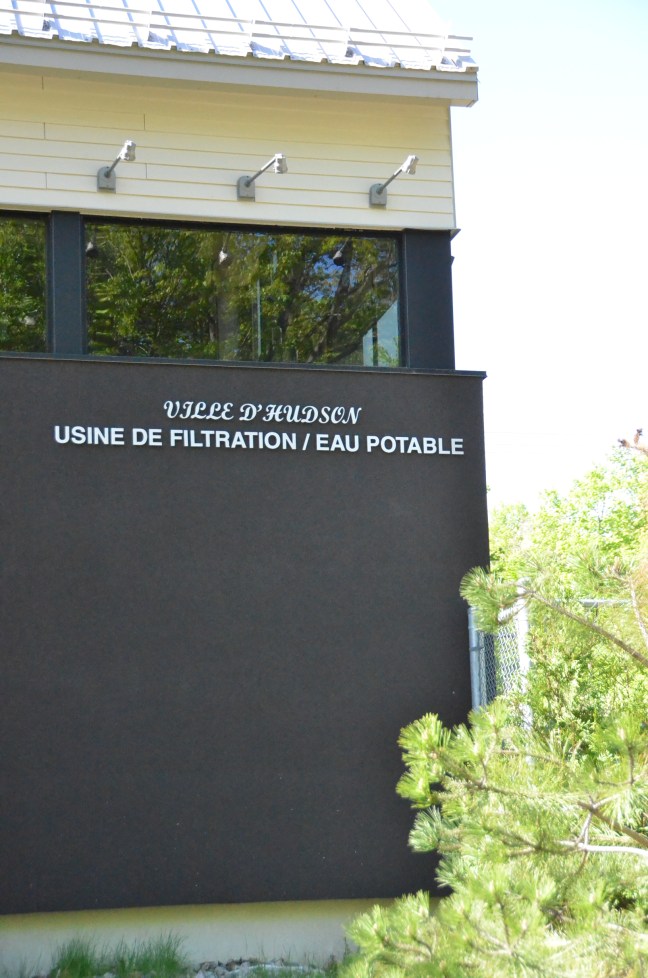
That geriatric knee-slapper comes to mind as I ponder the Town of Hudson’s mission to seek funding for its growing list of infrastructure projects, beginning with water.
Yesterday, I spoke with Peter Scheifke, our federal MP for Vaudreuil-Soulanges and Parliamentary Secretary to the Prime Minister for Youth. Scheifke briefed me on the money currently and coming available for infrastructure projects.
He began by noting $170 million in federal money available to Quebec municipalities of fewer than 100,000 residents for new potable water infrastructure and repairs to existing infrastructure. Costs are split three ways, with Ottawa and Quebec shouldering two thirds. Quebec racked up a $2.1 billion surplus in 2016, allowing an additional $400 million to be earmarked for municipal infrastructure.
Then there’s the Trudeau government’s new infrastructure program, under which Ottawa pays half, Quebec a third and the municipality just 17%.
But there’s a catch. A provincial law passed during the Duplessis era requires the feds to go through Quebec to fund municipal projects. Quebec is the only province with such a requirement.
Despite its infrastructure needs, Hudson isn’t on the list because it can’t satisfy Quebec’s requirements. “Hudson is not currently ready [for anything to be approved],” Scheifke told me.
Hudson’s council adopted a resolution at the town’s December budget meeting to hire a full-time grant chaser, but the town’s DG Jean-Pierre Roy told me this morning the town must file a public works intervention plan with the municipal affairs ministry (MAMOT) before filing grant-eligible proposals.
To draft a public works intervention plan, the town must first hire a consulting firm to compile data on every aspect of municipal infrastructure – roads, aqueducts, sewage and storm sewers, sidewalks, even streetlights. “They want us to pay what’s broken first,” Roy explained.
I was blown away when the DG said the town should have filed an intervention plan 10 years ago. Hudson has to play catchup and under Quebec’s grant guidelines, must re-prioritize its to-do list. It’s possible Hudson’s bumpy roads and treacherous sidewalks will take priority over waterworks upgrades for infrastructure funding.
Here’s the kicker: Under Quebec’s guidelines, Hudson may not qualify for potable-water infrastructure spending because it uses too much water.
According to an MRC Vaudreuil-Soulanges-funded study (Put Water on the Table, http://www.thousandlashes.ca, February 2016) Hudson’s residents consume 1,123,024 cubic metres of water a year, the fourth highest in the MRC. Quebec municipalities average between 200 and 300 litres per day per person; Hudson’s consumption tops 400. The southwestern sector consumes more than a thousand litres per day per person.
Hudson’s administration hopes to address overconsumption by sensitizing property owners, but if people don’t pay, they don’t care until their toilets stop flushing. And as I posted (Downtown, downtown, http://www.thousandlashes.ca Jan. 3) the usage differential between business and residential sectors is astronomical:
Hudson residents who volunteered for this council’s strategic planning committee looking at the water issue learned from the town’s water technician that Alstonvale and Hudson Valleys consume three times the amount of water used by the centre of Hudson. One participant told me the technician held up his smartphone so the committee could see how the town is able to monitor real-time usage and compare it with archival data. “We saw how it spiked when Alstonvale’s sprinklers went on.”
I’ve also learned the town faces a deadline for the installation of water meters in the business sector. Originally, MAMOT required business sectors to be metered by September 2017, but that deadline has been extended a year. Bottom line: Hudson must meter business water consumption and ensure the accuracy of its well and filtration-plant flowmeters by September 2018.
Roy said the town may agree to meter a sampling of residential properties to establish a basis for comparison, but is not obliged to do so.
The DG also told me the administration is still wrestling with water and sewer taxation issues beginning with those whose properties are located on the sewer system but are not connected. Roy confirmed these unconnected sewer dwellers do not pay either sewer tax. The municipality has never set a sewer connection deadline, so approximately 250 of the 700 eligible properties haven’t connected or paid sewer taxes in 10 years.
Water meters, sewer taxes and related infrastructure issues will be on the agenda for Monday’s January council meeting as this administration gets its house in order. Until that’s done, there will be no point in applying for infrastructure money, let alone any of those fanciful projects on the strategic planning list town hall spent so much time and money selling to Hudsonites.
Sadly, there’s no depanneur selling tickets for the infrastructure lottery.


 There’s a term in the data transfer industry: Mean time to innocence, or MTTI.
 thousandlashesdotca